Charleston’s history dates back to the late 1600s, meaning its centuries-old churchyards and historic burial grounds are filled with hundreds of years of memories and local lore. Once the sun sets, these sacred spaces shift from beautiful historic landmarks to eerie hubs of reported supernatural activity. Taking the Ghosts & Gravestones tour gives you an incredible opportunity to explore the Holy City’s haunted past, complete with an exclusive walk through a locked cemetery at night.
Charleston has burial grounds that date back hundreds of years, many created during periods of war, disease, and loss. Soldiers, sailors, children, and entire families were buried close to where they lived and worked. Burial sites were placed near churches, homes, and busy streets, not set apart from daily life. Death was visible, familiar, and often sudden.
Those same cemeteries still sit within the city today. Gates stay locked most nights. Paths remain narrow. Headstones lean and sink after centuries of weather and foot traffic. Visitors and locals continue to report strange sights and uneasy feelings while standing inside these spaces.
Many cemeteries people talk about today exist because of real, major events that unfolded in the city. Yellow fever outbreaks spread quickly through neighborhoods, filling burial grounds faster than planned. Ships were lost just offshore, and bodies were sometimes brought back days later. Wars sent wounded soldiers home or didn’t send them back at all. Burials often happened fast, and some graves were marked simply or left unmarked.
Reports tied to haunted cemeteries Charleston visitors mention tend to follow the same patterns. Figures are seen at a distance and then fade. The air suddenly feels colder along certain paths. A strong sense of being watched sets in while standing still near older graves. These experiences are often shared in connection with the same sections of each cemetery, which helps explain why certain burial grounds continue to stand out.
Magnolia Cemetery has been in use since the mid-1800s and sits along the Cooper River on the edge of the city. Many people buried here were connected to military service, shipping, or outbreaks that moved through Charleston during the 19th century. More than 2,000 soldiers are buried on the grounds, including members of the Confederate army and the crew of the H.L. Hunley.
Reports tied to the cemetery tend to happen near the outer roads and sections closer to the marsh. Visitors describe seeing figures dressed in gray standing near the trees or walking along the paths near dusk. These sightings are usually brief and happen at a distance. People often say they notice movement first, then realize no one else is nearby. The same areas come up often in these accounts, especially during quieter hours.

One of the most discussed areas is the burial site of the H.L. Hunley crew. The submarine sank during a Civil War mission, killing all eight men onboard. After their remains were recovered, they were buried together at Magnolia. Visitors standing near the markers sometimes report a heavy feeling or a sudden drop in temperature. These reports tend to focus on the same section rather than the cemetery as a whole.
Local accounts have also connected Magnolia Cemetery to stories inspired by Edgar Allan Poe, particularly “Annabel Lee.” Some visitors describe seeing a pale woman walking alone along the winding roads, usually late in the day. The figure is often seen following the same route before fading from view. While the details vary, the location and timing stay consistent, which keeps the story tied to this cemetery.

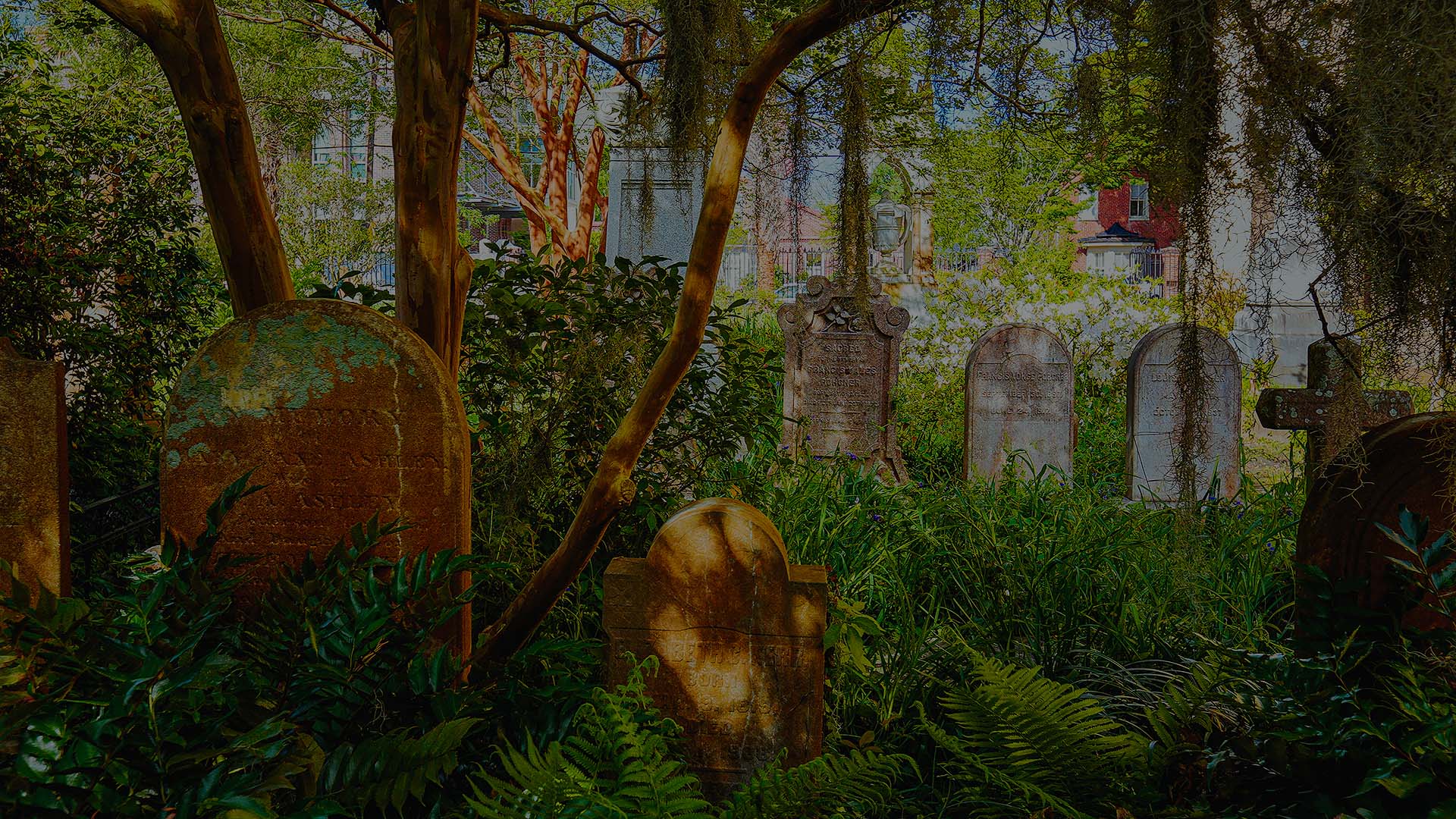
The Unitarian Church cemetery dates back to the late 1700s and hasn’t changed much over time. The grounds were left wild on purpose, with vines, trees, and uneven paths growing around the graves. Some headstones are partly covered, and others lean after years of weather. Walking through the cemetery usually means slowing down and paying attention to where you step.
Lavinia Fisher is the name most often linked to this site. She was executed in 1820 and buried in an unmarked grave somewhere on the grounds. Local accounts say her father dug several graves so no one would know which one was hers. Visitors sometimes report sudden cold spots while moving through thicker areas of growth. Others mention feeling uneasy in certain sections, then fine again once they leave those paths.
Some people also describe seeing a woman in light-colored clothing standing near older markers or among the vines. The figure doesn’t move and is often noticed only after someone stops walking. Reports like these are why the cemetery is often mentioned when people talk about Charleston haunted cemeteries tied to long-standing stories.
The overgrown condition of the grounds comes up often in these accounts. Roots break through tombs, and plants continue to spread across the space. That setting is one reason it’s also included among the haunted cemeteries Charleston visitors ask about when learning the city’s burial history.
St. Philip’s Episcopal Church cemetery sits along Church Street and has been used as a burial ground since the city’s early years. Graves are packed close together, and many headstones are worn down or hard to read after years of weather. The cemetery is split by the street, so people pass it every day while going about their routines.
One of the most talked-about stories tied to the cemetery involves Sue Howard Hardy. She died in 1888 shortly after losing her newborn child. Years later, a photograph taken near her grave appears to show a light figure kneeling nearby. Visitors who stop in that area sometimes report sudden chills or a heavy feeling that goes away once they move on. Most of the reports connected to her name stay focused on the same small section of the grounds.

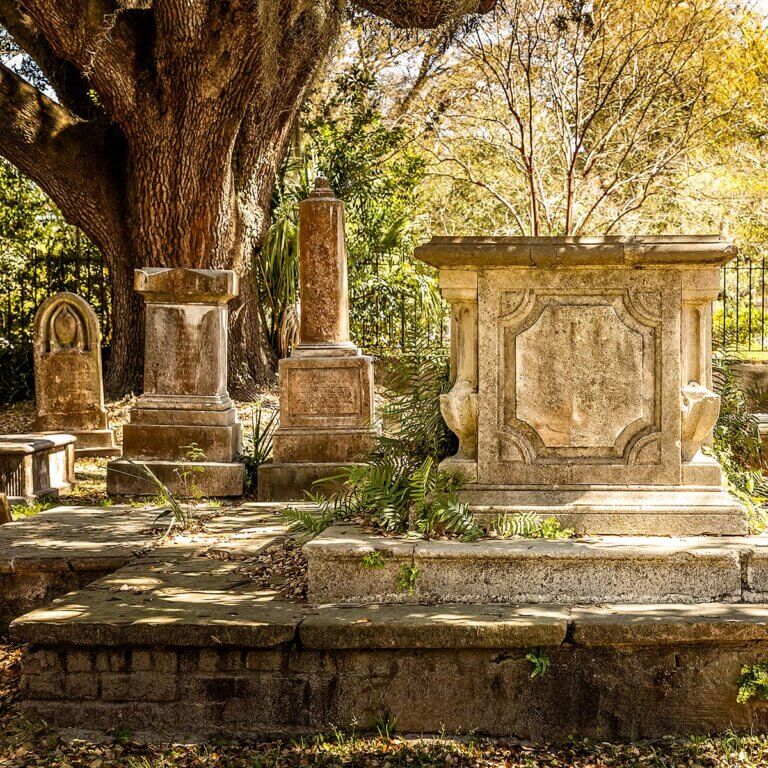
The Circular Congregational Church graveyard sits near Meeting Street and holds some of the oldest marked graves in the city. Many headstones date back to the late 1600s and early 1700s. The markers are close together, and several feature skulls, wings, and hourglass carvings that were common during early burial practices. The ground is uneven in places, and the layout hasn’t changed much over time.
Reports connected to this graveyard often involve sound rather than movement. Visitors describe hearing soft voices, footsteps, or low murmuring while standing near the older stones. Some people say the sounds stop as soon as they move or speak. Paranormal investigators have also shared recordings taken in the area that capture unexplained noises, though many reports come from casual visitors rather than formal investigations.
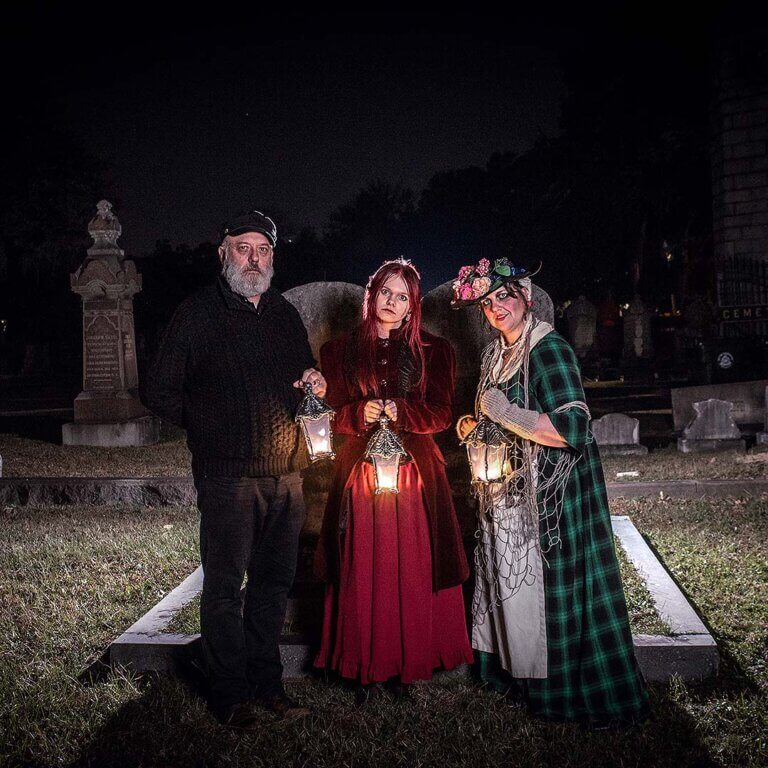
The Ghosts & Gravestones Frightseeing Tour shares stories connected to Charleston haunted cemeteries through live narration from spooky guides. The focus stays on documented events, historical records, and long-repeated reports rather than dramatized storytelling. Cemeteries are discussed as part of the city’s daily past, not as isolated attractions.
Guides explain how burial practices changed over time and why certain graveyards remained within walking distance of homes and churches. They also point out patterns in the stories people continue to share, including where sightings tend to happen and how those details stay consistent across generations. This approach gives visitors a clearer understanding of haunted cemeteries Charleston residents have talked about for years, without separating the stories from the history that shaped them.
As the city changed, those burial grounds stayed right where they were. You still pass them while driving through neighborhoods, waiting at stoplights, or walking familiar routes where headstones sit just beyond iron gates. That closeness is part of why Charleston haunted cemeteries don’t feel distant or forgotten. They remain part of everyday Charleston, and the stories tied to them keep coming up in quiet, ordinary ways.
The Unitarian Church cemetery was intentionally left in a natural state. Trees, vines, and uneven ground were allowed to grow around the graves as part of early burial beliefs. Limited maintenance over the years has kept that appearance in place, which shapes how people experience the space today and why it stands out among Charleston haunted cemeteries.