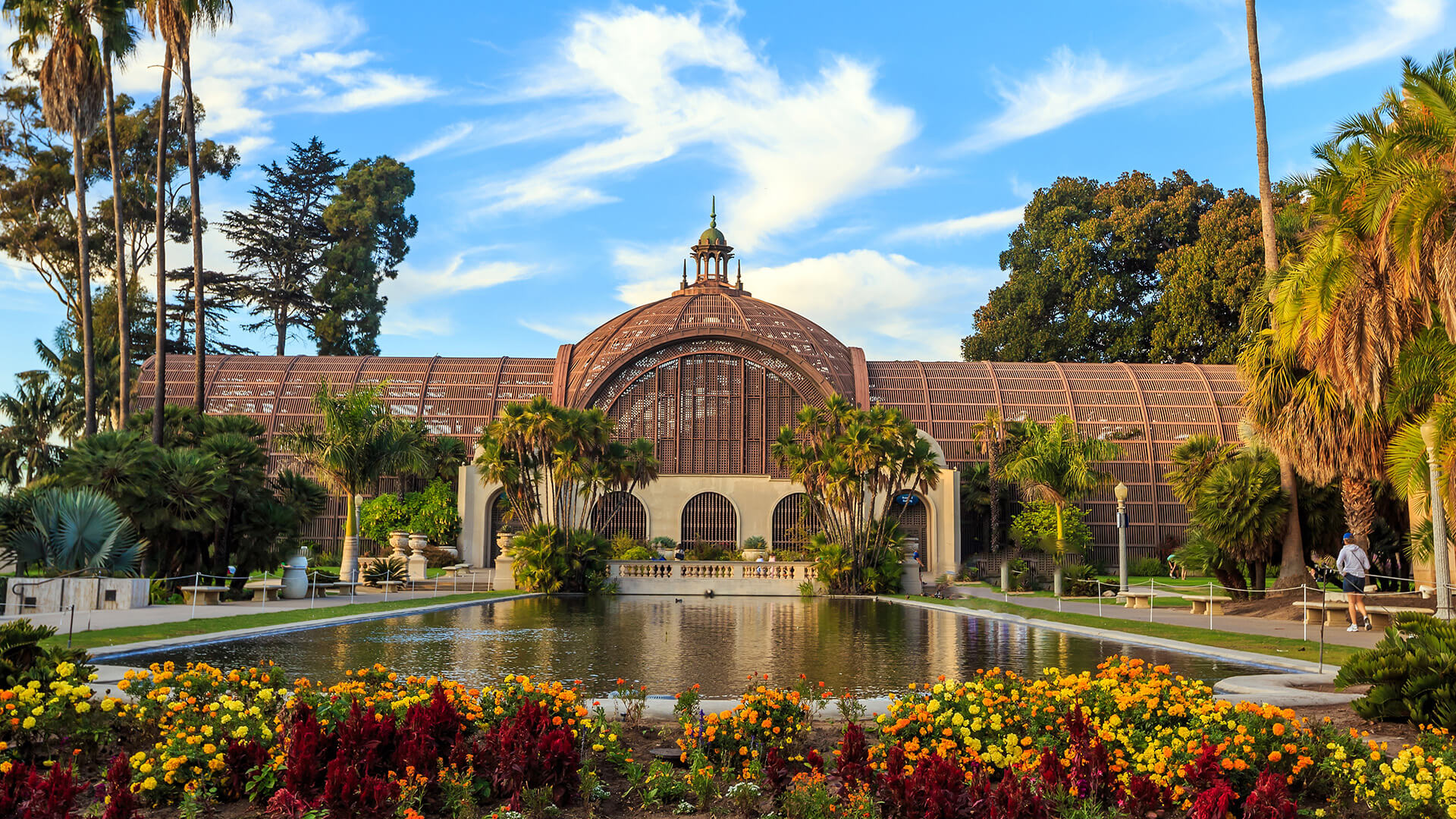
Balboa Park is celebrated as San Diego’s premier 1,200-acre cultural oasis, famous for its lush gardens, world-class museums, and stunning Spanish Colonial Revival architecture. Established in 1868 as “”City Park,”” this massive landmark has hosted grand international expositions, temporary wartime facilities, and generations of artists. But when the sun sets, the park’s beautiful courtyards and arched walkways take on an eerie, shadowed energy.
Balboa Park, San Diego is a 1,200-acre landmark celebrated for its museums, gardens and striking Spanish Colonial Revival architecture. It’s home to cultural institutions, scenic walking paths and open green spaces that have been enjoyed for generations. Beyond its well-known attractions, the park is filled with lesser-known stories, unusual details and bits of history that give it a character all its own. These legends and curiosities offer a different way to see Balboa Park and add a sense of intrigue to its beauty. Visitors might hear ghost stories tied to historic theaters or learn about clever architectural features that are easy to miss. Some gardens hold playful nods to the park’s past, while certain buildings hide symbols whose meaning has been debated for decades. Each visit has the potential to reveal something new, and that element of discovery helps keep Balboa Park one of San Diego’s most fascinating destinations.
The history of Balboa Park, San Diego began in 1868 when city leaders designated more than 1,000 acres as public land under the name “City Park.” At first, the area was little more than open space with a few rough paths. Its transformation began in 1892 when Horticulturist Kate Sessions agreed to plant 100 trees each year in exchange for land for her nursery. She introduced species such as jacaranda, bird-of-paradise and eucalyptus, which still add color and shade to the park today. Her dedication to public greenery across the city earned her the title “The Mother of Balboa Park.” The name change to Balboa Park came in 1910, honoring Spanish explorer Vasco Núñez de Balboa. This rebranding set the stage for the 1915 Panama-California Exposition, which brought the Spanish Colonial Revival architecture, lush landscaping and cultural presence that remain central to the park’s identity.
The Old Globe theater is among the most beloved cultural sites in Balboa Park, San Diego. Built in 1935 as a replica of Shakespeare’s Globe, it has hosted countless performances and developed a reputation for ghostly encounters. The theater tradition of keeping a single “ghost light” on stage when the venue is empty is alive here, both as a safety measure and as a nod to theatrical superstition. Actors and crew members have reported footsteps on empty stages, the rustle of costumes in the wings and fleeting shadows that vanish without explanation. Whether these are tricks of the imagination or something more mysterious, the atmosphere of The Old Globe has made it a favorite stop for visitors interested in the park’s stranger stories.

Today, Zoro Garden is a peaceful butterfly sanctuary, home to winding stone paths, bright blooms and plants designed to attract native and migratory species. In the 1930s, however, it was the site of one of the park’s most controversial attractions. During the 1935 California Pacific International Exposition, the sunken rock garden became home to a staged nudist colony. Performers posed as “naturalists” while engaging in activities such as sunbathing, reading and playing games. Visitors paid admission to watch, and the exhibit sparked debates about morality and entertainment. The garden’s transformation into a family-friendly space has made its history all the more surprising for those who stumble across it today.

The California Tower is one of Balboa Park, San Diego’s most recognizable features, admired for its ornate design and panoramic views. The chimes that ring out each hour are not from traditional bells but from an electric carillon that reproduces their sound with remarkable accuracy. Many visitors are surprised when they learn there are no large bronze bells inside. The tower is part of the California Building, constructed for the 1915 Panama-California Exposition, and its observation deck offers one of the best vantage points in the city. Learning the secret of its “bells” is just one of the many small discoveries that make exploring the park so rewarding.

The Timken Museum of Art owes its existence to the wealthy and reclusive Putnam siblings. Known for traveling around San Diego in a curtained limousine and avoiding public attention, they were nonetheless passionate supporters of the arts. Their museum, often called the “jewel box” of Balboa Park, houses a carefully curated collection of European Old Masters, American paintings and Russian icons. The contrast between the museum’s openness and the guarded personal lives of its founders has only deepened the intrigue surrounding them.

The San Diego Model Railroad Museum, one of the largest of its kind, is known for its elaborate miniature worlds. Hidden among these detailed displays is a tiny shark in a model swimming pool. Guests often challenge each other to find it, and discovering the small detail has become a lighthearted tradition for many repeat visitors.

At the Casa de Balboa, look closely at the roofline and you will see caryatids, sculpted figures serving as both decoration and support. These statues have sparked debate for decades. Some believe they depict real individuals connected to the park’s early history, while others think they are symbolic representations meant to embody art and culture. The craftsmanship is remarkable, and their presence adds yet another layer to the park’s architectural beauty.

Balboa Park, San Diego is known for its museums, gardens and architecture, but its character is also shaped by the unusual details hidden within it. Each corner holds something unexpected, whether it is a playful design choice, a quirky piece of history or a story that has been passed down for decades. Exploring with curiosity reveals another side of the park, one that blends fact, mystery and charm in ways that keep visitors coming back.
For more interesting stories about the mysteries and dark part of San Diego, consider taking a Ghosts & Gravestones® Frightseeing® Tour. You’ll be taken to some of the city’s — and country’s — most haunted locations in a family-friendly but exciting tour.
City Park was renamed Balboa Park, San Diego in 1910 to honor Vasco Núñez de Balboa, the first European known to have seen the Pacific Ocean. The name was chosen in preparation for the 1915 Panama-California Exposition, linking the park to themes of exploration and discovery that still resonate strongly today and continue to inspire visitors from around the world.