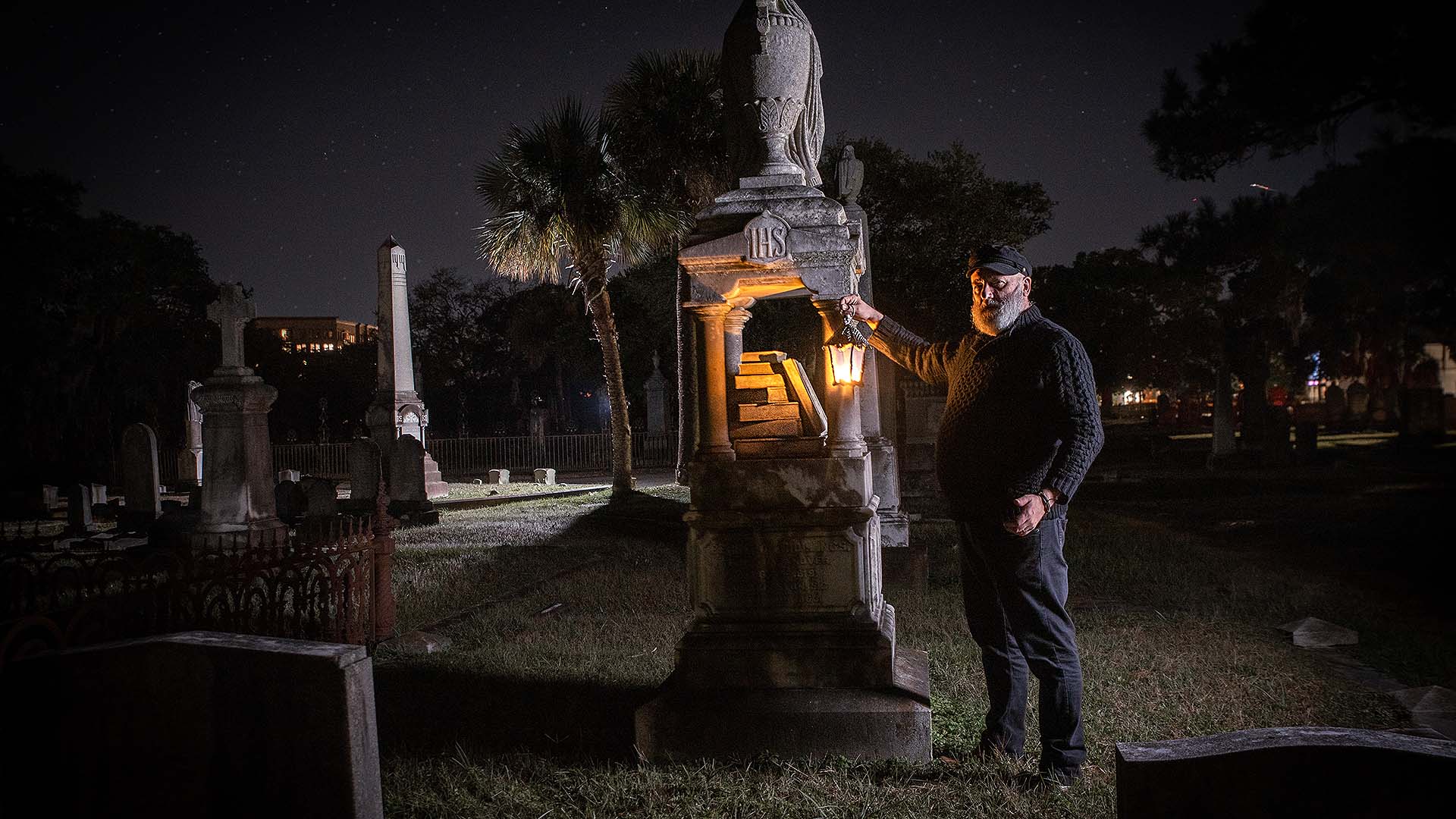
Charleston is widely known for its historic charm and Southern beauty, but its 350-year history has left a dark legacy of wars, pirate executions, and tragic losses. From historic theaters to centuries-old graveyards, the Lowcountry is filled with stories of restless spirits. Taking the Ghosts & Gravestones tour offers a unique way to experience Charleston’s haunted history after dark, mixing theatrical storytelling with exclusive access to locked local sites.
Charleston has countless stories of unexplained, potentially paranormal, activity tied to its past. Founded in 1670, the city grew through war, trade, disease, and disaster, leaving behind places where many believe history never fully faded. Old streets, historic churches, waterfront parks, and preserved buildings all play a role in the lore of Charleston ghost stories. This guide explores where those stories come from and why they remain part of daily life in the city’s historic district.
Charleston’s reputation grew from events that were witnessed openly and remembered for generations. The city earned the nickname “The Holy City” because of its many church steeples, but daily life was often interrupted by hardship. Yellow fever outbreaks returned again and again during the 18th and 19th centuries, spreading quickly through crowded neighborhoods. Families were sometimes forced to bury loved ones within days, and graveyards filled faster than planned.
Natural disasters added to that sense of uncertainty. In 1886, a powerful earthquake damaged much of the city, collapsing buildings and cracking church walls. Many residents slept outside for weeks, unsure which structures were safe as aftershocks continued.
Piracy also played a visible role in Charleston’s past. During the early 1700s, pirates such as Stede Bonnet operated along the coast. Executions were carried out near what is now White Point Garden, and bodies were displayed along the harbor so arriving ships would see them.
Military imprisonment shaped the city during both the Revolutionary War and the Civil War. Charleston endured long sieges, shortages of food, and the constant presence of soldiers. Places like the Old Exchange and Provost Dungeon held prisoners in cramped, unhealthy conditions where disease spread easily. Cultural traditions influenced how people understood these experiences as well. Gullah Geechee folklore shaped beliefs about spirits and unexplained encounters, and those stories were passed down within families long after the events themselves had ended. Together, these moments formed the foundation for how Charleston ghost stories continue to be told today.
The Old City Jail is one of the locations that comes up most often in Charleston ghost stories because of how long it was in use and what happened inside its walls. The jail operated from 1802 until 1939 and held a wide range of prisoners, including thieves, pirates, and Civil War captives. The building sits on land that had already been used as a public workhouse, which adds another layer to its past. Overcrowding was common, and prisoners were kept in small cells with little airflow and poor sanitation.
Several well-known figures passed through the jail, including Lavinia and John Fisher, who were executed for highway robbery in the early 1800s. Their story is still shared today, but many reports focus on the building itself rather than specific names. Visitors often mention heavy footsteps on upper floors that are no longer open, especially near the stairwells. Others describe doors that seem louder than expected or the feeling that someone is standing just out of view while walking past the cells.
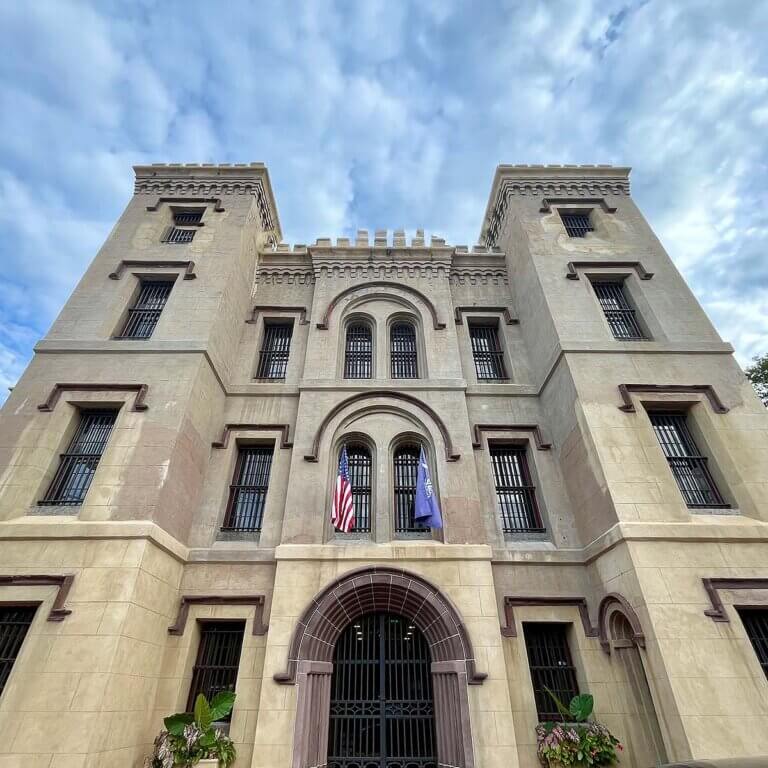

Completed in 1771, the Old Exchange and Provost Dungeon served several roles over time, but it’s best known for its use as a British military prison during the American Revolution. Prisoners were held below street level in rooms that stayed dark and damp year-round. Many were kept there for weeks or months at a time with limited food, little light, and almost no fresh air. Guards accessed the dungeon through narrow passages, and prisoners spent most of their time sitting or lying on cold brick floors.
The dungeon space remains largely unchanged today, with thick brick walls and low ceilings that still trap sound. Staff and visitors often report noises that seem to come from the same holding rooms, even when the area is empty. Some describe metal scraping sounds near doorways or stairwells, while others hear low voices that fade before words can be made out. Temperature changes are also reported near certain cells, where the air feels colder than surrounding rooms. These same details are shared again and again, which is why the Old Exchange remains closely tied to Charleston ghost stories connected to long confinement and daily suffering.
Established in 1772, the Unitarian Church graveyard follows a design style that allowed nature to reclaim the space over time. Trees, vines, and uneven ground were left in place to reflect 19th-century beliefs about life and death. This setting gives the graveyard a quiet, enclosed feel that many visitors notice right away.
Over time, the graveyard became tied to some of the most repeated Charleston ghost stories, mainly because the details people share tend to stay the same. One of the oldest stories connected to the site involves Annabel Lee, a figure often linked to loss and long waiting. The story is usually described as a woman mourning a lover who never returned, and it’s been passed down in different forms for generations. Guides often mention that her presence is tied to quiet moments rather than sudden movement, which is why the story still comes up during evening walking tours.

Another presence people talk about is the Lady in Black, believed by some to be Anna Nettles. According to local accounts, she dressed in mourning clothes for years after her fiancé was lost at sea and was known to walk the same paths regularly. Visitors today often describe seeing a woman in dark clothing near the same headstones, usually toward the back of the graveyard. Many say they spot her from a distance, then lose sight of her when they move closer. Others mention slow footsteps behind them or the feeling that someone is nearby when no one else is there.

Dock Street Theatre holds a long history in Charleston ghost stories connected to performance spaces and long hours spent inside empty buildings. The original theater opened in 1736 as the first structure in America designed specifically for stage productions. After fires and rebuilding, the current building was completed in the 1930s on the remains of the old Planters Hotel. Parts of the original brick foundation and lower walls still sit beneath the theater today.
Poogan’s Porch is often mentioned in Charleston ghost stories because it began as a private home long before it became a restaurant. The Victorian house was built in 1888 and later converted into a dining space in the 1970s. Before that, it was the longtime residence of two sisters, Zoe and Elizabeth St. Amand, who lived there for decades. Much of the original layout remained intact after the conversion, including the upstairs rooms and staircases, which helps explain why the space still feels more like a home than a commercial building.
Zoe St. Amand is the figure most often connected to reported activity. Staff members working late shifts describe seeing an older woman in dark clothing near the upstairs dining rooms or standing at the top of the staircase. Some say chairs are found slightly out of place in the morning, especially in the older rooms, or doors are unlocked after being secured the night before. Others mention footsteps moving between floors during early-morning prep hours, when only a few people are inside. These reports tend to follow the same patterns, which is why Poogan’s Porch continues to appear in Charleston ghost stories tied to familiar routines and spaces that still feel lived in.
The Battery and White Point Garden sit at the southern end of the Charleston peninsula and are often mentioned because so much of the city’s public life has passed through this area. During the Civil War, The Battery served as a defensive position overlooking the harbor. Earlier, in the early 1700s, White Point Garden was used for public executions. In 1718, pirate Stede Bonnet and several members of his crew were hanged nearby, and their bodies were displayed along the waterfront as a warning. These events took place out in the open, where residents and sailors would have seen them.

People walking through the park after sunset often describe activity that feels tied to specific paths and corners. Some report small points of light near the oak trees that fade when approached. Others mention dark figures near the old cannons or along the seawall, especially on quieter nights when the park is nearly empty. Sudden chills and a heavy feeling are also reported near the same stretches of walkway.

St. Philip’s Episcopal Church cemetery is one of the oldest burial grounds in Charleston, and its long, continuous use is part of why stories remain tied to it. The church was first established in the late 1600s, and the current building dates to 1836. The cemetery is divided by Church Street, with graves placed close together and marked by worn headstones that reflect centuries of weather and foot traffic. Many early political leaders, clergy members, and prominent families are buried here, which means the space has always been active rather than tucked away.
The USS Yorktown is often included in Charleston ghost stories because of how long it served and how many people lived and worked on board. Commissioned in 1943, the aircraft carrier played a major role in World War II and later served during the Vietnam War. During its years of active duty, more than 100 sailors died on the ship due to combat, training accidents, and onboard incidents. Today, the ship remains docked at Patriots Point as a museum and memorial.


The Powder Magazine is the oldest public building in South Carolina and has stood in Charleston since 1713. It was built to store gunpowder away from homes and businesses during the colonial period. Thick brick walls, deep-set windows, and a heavy iron door helped reduce the risk of explosions. The building remained in use through several conflicts and was closely guarded during times of unrest.
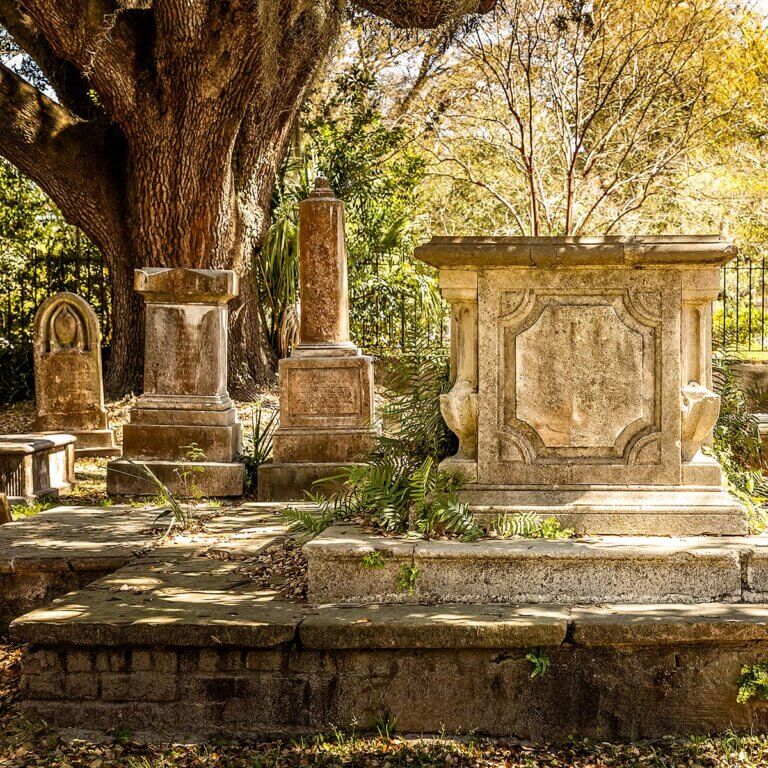
The Circular Congregational Church graveyard dates back to the late 1600s and contains some of the oldest marked graves in Charleston. Many of the headstones feature skulls, wings, and hourglass carvings that reflect early burial customs and views on death. Some markers sit at uneven angles, while others have sunk into the ground over time, making the layout feel unsettled even during the day. Narrow paths run close to the graves, which forces visitors to move slowly and stay aware of where they are stepping.
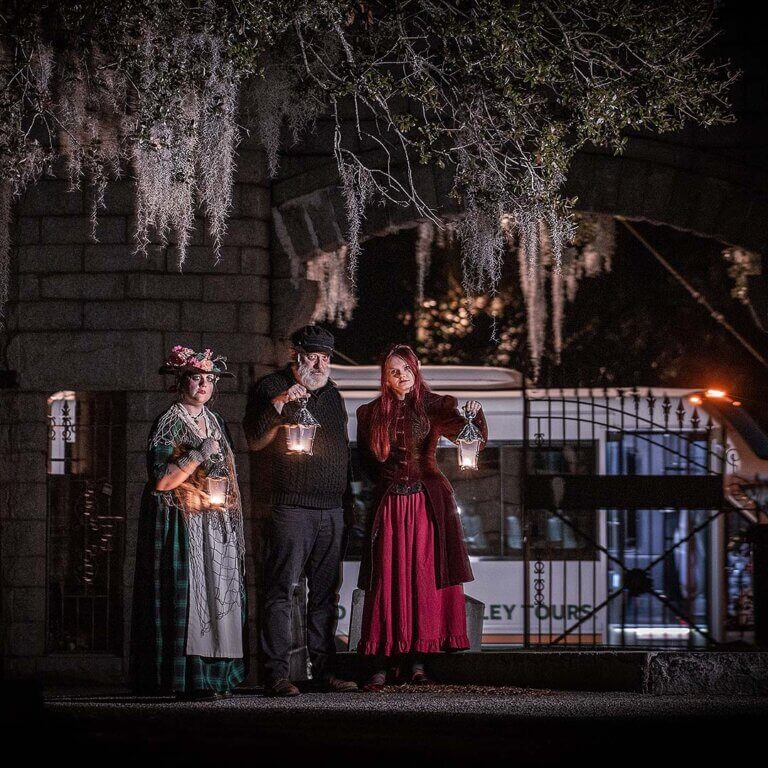
Many visitors prefer to learn about Charleston ghost stories through experiences or tours that focus on real history before reported activity. Hearing names, dates, and documented events while standing near the locations where they occurred helps keep the stories clear and easy to follow. Being able to see how close the sites are to one another also adds context, especially in a city where so much history happened within a few blocks.
The Ghosts & Gravestones Frightseeing Tour presents Charleston ghost stories through live narration from spooky guides. Each sight is connected to documented moments from the city’s past, including imprisonment, disease outbreaks, fires, and wartime events. The focus stays on how those moments shaped the places people still walk through today and why certain locations continue to be talked about generation after generation.
Charleston is often described this way because much of its history unfolded in public and close quarters. Wars, disease outbreaks, imprisonment, and maritime accidents all left lasting marks on the city. Many reported experiences are tied to specific buildings and recorded events, which helps explain why these stories continue to be shared across generations.