Charleston’s history is deeply woven into the streets, homes, and graveyards that still stand today. Because tragedies, epidemics, and pirate executions often happened out in the open or close to where people lived, the city has maintained a strong connection to its supernatural past. Taking the Ghosts & Gravestones tour gives you an up-close look at the most infamous spirits of the Lowcountry and the historic locations where their stories began.
Charleston has a long history where many hard moments happened out in the open. Executions, jailings, and disease outbreaks took place close to homes, churches, and busy streets. Because of that, stories stayed tied to real people instead of turning into vague legends. Names were remembered. Places stayed familiar. Over time, those details stuck, especially in parts of the city that never changed much.
What keeps these ghost stories and legends part of local conversation isn’t sudden scares or dramatic moments. It’s the way the same names keep coming up in the same locations. When people hear similar accounts connected to real events, the stories feel harder to brush off. They don’t sound invented. They sound like pieces of history that never fully settled.
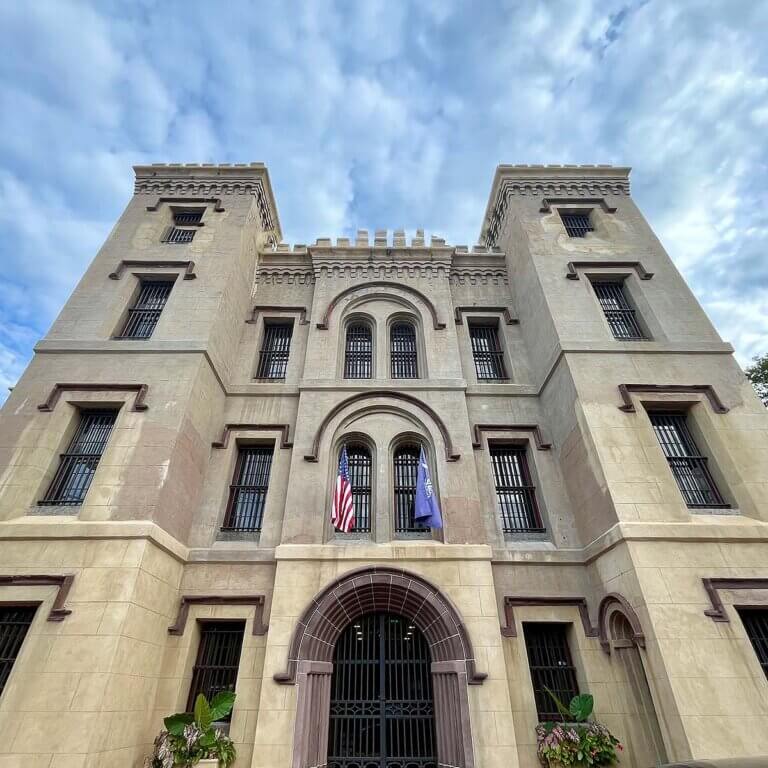
Before her death, Lavinia Fisher was held at the Old City Jail. That building still looks much the way it did in the 19th century, which is why it comes up so often in stories tied to her name. Visitors and staff report sounds in empty cell areas, movement near locked doors, and a heavy feeling in certain hallways, often in the same spots.
Because her case was recorded and her punishment was carried out in front of the city, Lavinia Fisher remains one of the infamous Charleston ghosts people mention when talking about crime and punishment in the city’s past. The stories connected to her stay close to the jail itself, which helps explain why her name hasn’t faded over time.

Bonnet was hanged near what’s now White Point Garden, at the southern tip of the peninsula. At the time, this area was used for punishment and public display. Executed pirates were sometimes left visible near the waterfront, which made the location part of daily life for Charleston residents.
People walking through the park at night often mention shadows near the trees or the sound of footsteps on paths that appear empty. Others describe a heavy feeling near the seawall, especially in spots tied to early executions. These reports come up often when people talk about infamous Charleston ghosts because the history connected to this area is specific and well-recorded.
She is most often associated with the Unitarian Church cemetery. The cemetery has been kept in a natural state for centuries, with trees, vines, and uneven ground left largely undisturbed. Many visitors say the lack of clear paths makes the space feel unchanged, which adds to why stories connected to Annabel Lee have lingered here for so long.
People who visit the cemetery in the evening describe seeing a pale figure standing still among the headstones or moving slowly along the same paths. Others say they notice her from a distance, then lose sight of her when they move closer. These details tend to stay consistent, which is why Annabel Lee is still mentioned when people talk about infamous Charleston ghosts tied to loss and waiting rather than fear.

Poogan’s Porch is often included in ghost stories because it still feels like a lived-in space. The Victorian house was built in the late 1800s and served as a private residence long before it became a restaurant. That long stretch of everyday use matters, since many stories focus on quiet moments that happen when the building is empty rather than during busy hours.
The spirit most often mentioned is Zoe St. Amand, who lived in the home for many years. Staff members describe seeing a woman in dark clothing standing in dining rooms after closing or reflected briefly in mirrors. Chairs are sometimes found shifted between shifts, and doors have been reported to open or close on their own, usually without any noise.
Another presence tied to the restaurant is Poogan, the neighborhood dog the restaurant was named after. Guests occasionally mention feeling something brush against their legs while seated, even when no animal is nearby. These smaller details are why Poogan’s Porch remains part of conversations about infamous Charleston ghosts connected to places people still visit every day.
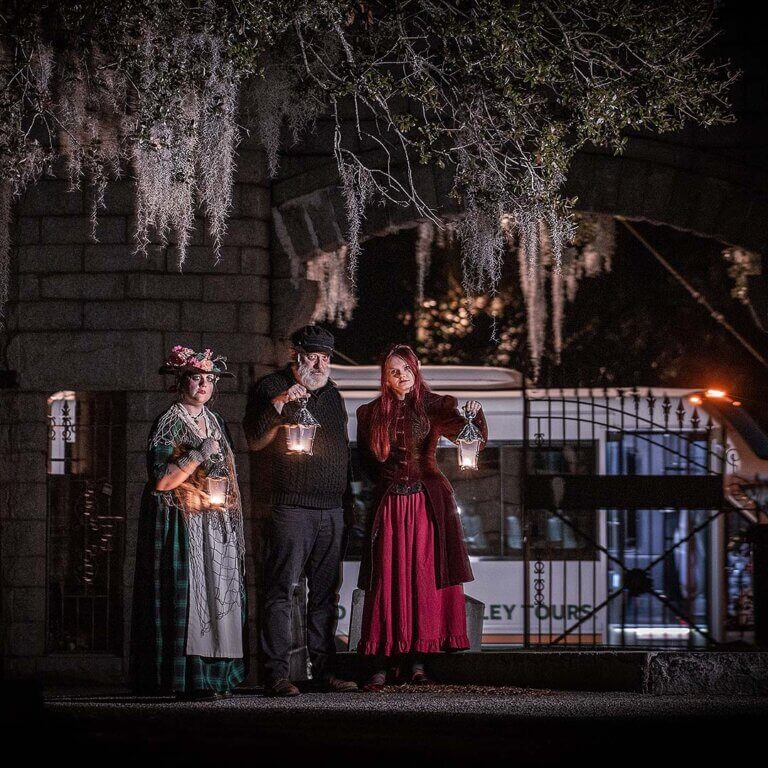
The Ghosts & Gravestones Frightseeing Tour connects stories to real locations across the city. Guides explain what happened, who was involved, and why the same places keep coming up again and again. Hearing those details close to where events unfolded helps the stories feel clear and grounded.
What keeps it fun is the balance between history and mood. You’ll hear about recorded deaths, old jails, graveyards, and long-shared accounts that still get talked about today. Some moments spark a nervous laugh. Others get quiet fast. By the end, it’s easy to understand why haunted history Charleston visitors ask about keeps circling back to the same places. The stories stick because they’re creepy, clear, and tied to the city itself.
Charleston’s ghost stories have lasted because the city never separated its past from its present. Homes, churches, graveyards, and former jails weren’t pushed out or rebuilt somewhere else. They stayed right where they were, woven into everyday life. That closeness makes it hard for the stories tied to those places to fade. Even regular things like walking the dog or heading to dinner can put you right beside sites where something terrible once happened.
When people talk about infamous Charleston ghosts, the conversation usually circles back to the same question. Why do certain names keep coming up, and why do they stay tied to the same spots? The answer often sits in the history itself. Public executions, long imprisonments, disease outbreaks, and sudden loss all happened in places people still pass every day. Those moments left marks that didn’t disappear just because time moved on. Sometimes the stories stick simply because the city kept the setting almost exactly the same.
Many visitors choose tours that focus on real locations and documented events rather than sudden scares. The Ghosts & Gravestones Frightseeing Tour shares stories tied to recorded deaths, long-shared accounts, and places that continue to come up in reports. These tours help explain why infamous Charleston ghosts remain part of local conversation by showing how history and location stay closely connected.