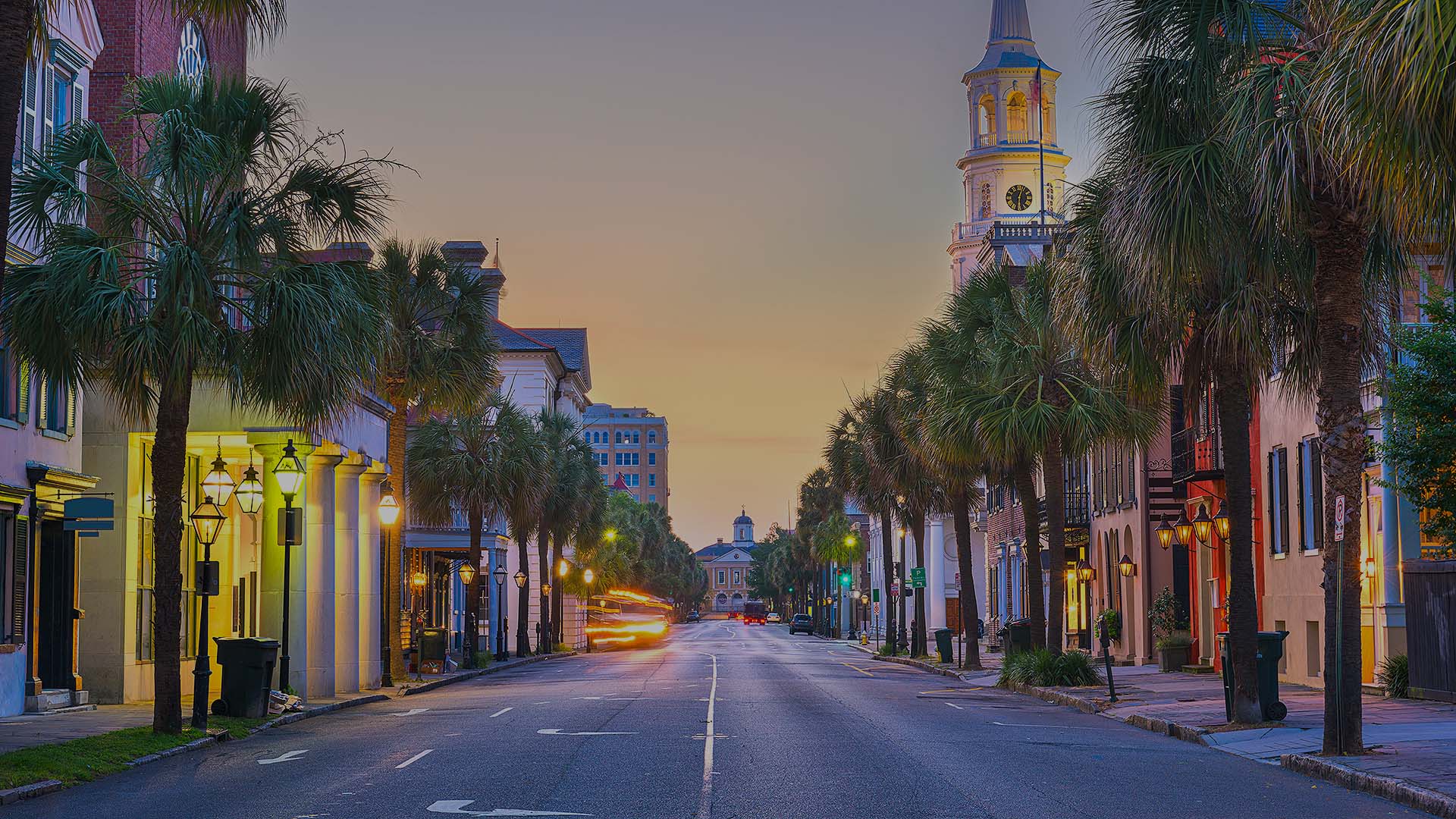
Charleston’s long and turbulent history, spanning over 350 years, has left behind an undeniable legacy of paranormal encounters. From brutal pirate executions and devastating fires to the horrors of the Civil War, the city’s past is etched directly into its cobblestone streets and historic structures. Taking the Ghosts & Gravestones tour allows you to explore these haunted places after dark, combining theatrical storytelling with an exclusive nighttime walk through a locked cemetery.
Much of Charleston’s history has unfolded in public. Executions, jails, graveyards, and hospitals weren’t tucked away on the outskirts. They sat close to homes, shops, and churches. Many of those sites are still standing, and some are still used every day. When people talk about Charleston being one of the most haunted cities in America, they’re usually reacting to how close those places still feel.
The Ghosts & Gravestones Frightseeing Tour is built around that idea. Stories aren’t shared in isolation. They’re tied to the locations where events happened, from old jails to graveyards that haven’t changed much in centuries. This guide will outline some of the city’s best paranormal hot spots.
The Old Exchange and Provost Dungeon sits near the waterfront, where trade, war, and punishment once overlapped. Built in the early 1770s, the upper floors handled shipping and customs business. The dungeon below served a very different purpose. Prisoners were held underground during the American Revolution, often for long periods and under rough conditions.
The dungeon rooms were dark, damp, and crowded. Airflow was limited, and prisoners were kept close together. Many became sick. Some didn’t survive. That history matters because most stories tied to this site focus on the lower level, not the public rooms above.
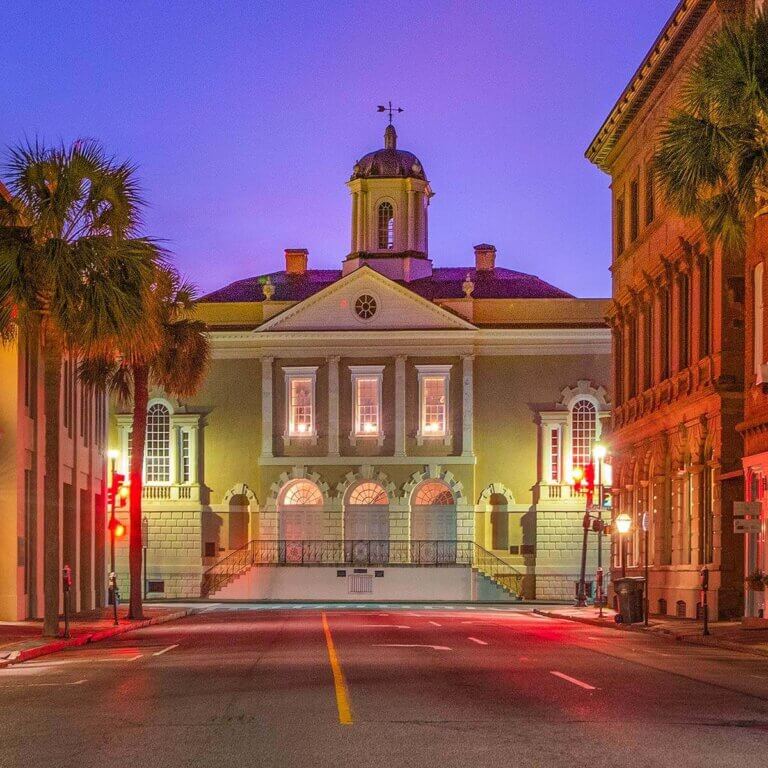
Visitors often mention cold spots, muffled voices, or the sound of movement near the old holding areas. Others describe feeling uneasy in certain corners of the dungeon. Because the space hasn’t changed much, it’s often listed among the haunted places in Charleston where the past feels especially close.
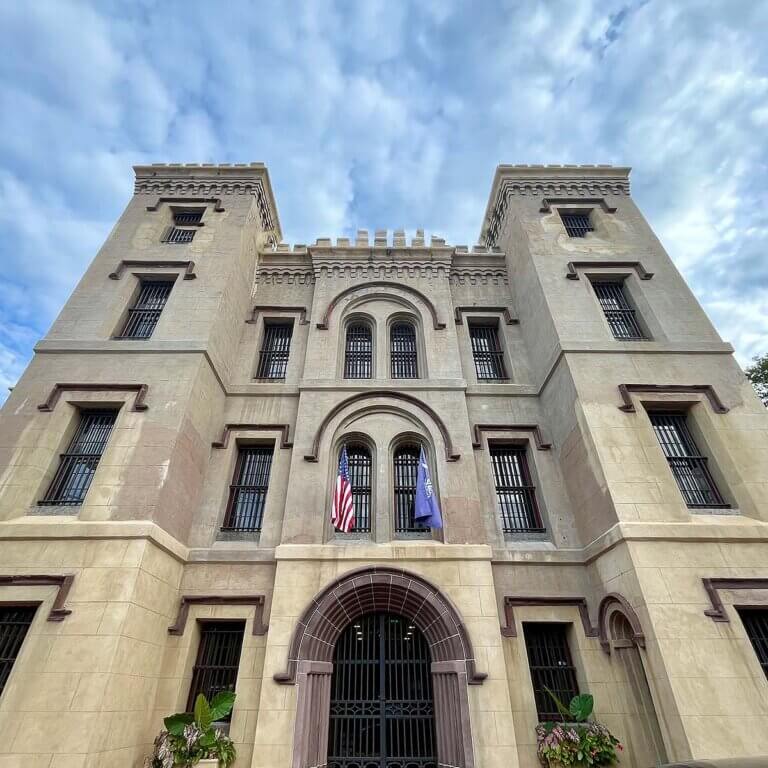
The Old City Jail was in use from 1802 until 1939. It held all kinds of prisoners, including thieves, pirates, and soldiers. Overcrowding was common, and many inmates spent months waiting inside without knowing their fate.
Cells were small and poorly ventilated. Heat and illness were constant problems. Prisoners were often chained or kept in shared spaces with little privacy. Several well-known figures passed through the jail, including Lavinia Fisher, which is one reason her name still comes up in stories tied to the building.
People who visit the jail describe hearing voices, footsteps, or metal sounds when no one else is nearby. Others mention a heavy feeling on the upper floors where prisoners were held before execution. The jail still looks much the way it did more than a century ago, which helps explain why it’s often named as one of the haunted places in Charleston people remember most.
The Unitarian Church graveyard has been in use since the late 1700s and looks much the same as it did generations ago. Unlike many cemeteries that were later cleared or landscaped, this one was allowed to grow naturally. Trees stretch over the paths. Vines wrap around headstones. Some markers lean or sink into the ground after centuries of wear.
That setting plays a big role in the stories connected to the graveyard. Visitors often say the space feels quiet in a way that stands out, even during busy times of year. Reports usually involve seeing figures at a distance, hearing slow footsteps, or sensing movement along the paths when no one else is nearby.

Several long-shared stories are tied to grief and waiting rather than fear. Because the graveyard hasn’t been reshaped or modernized, it’s often mentioned among the haunted places in Charleston where the past feels undisturbed and close to the surface.
Philadelphia Alley, sometimes called Dueler’s Alley, is a narrow passage tucked between buildings in the historic district. In the 18th and 19th centuries, it was known as a quiet place where men settled disputes through duels. These encounters were illegal but common, and injuries or deaths were not unusual.
Today, the alley looks calm, but its history gives it a different weight after dark. People walking through often describe hearing footsteps behind them or feeling like someone is nearby when the space is empty. Others mention sudden cold air or the sense of being watched while passing through.
Because of its history and tight layout, Philadelphia Alley is often included in lists of haunted places in Charleston tied to violence that happened quickly and without warning. The alley hasn’t changed much, which helps explain why stories connected to it continue to circulate.

The Battery Carriage House Inn sits near the southern end of the peninsula, close to where public executions once took place. The building dates back to the mid-1800s and has served several purposes over the years, including use as a private residence and later as an inn. Because of that long stretch of use, many of the stories tied to the property focus on individual rooms rather than the entire building.
Guests often talk about Room 8 and Room 10. Reports include doors opening or closing on their own, lights turning on without explanation, and the feeling that someone is standing just out of view. Some people describe seeing a figure missing part of its body, while others report a man dressed in older clothing who appears calm and quiet.
What makes the inn stand out among haunted places in Charleston is how specific the reports tend to be. The same rooms, the same details, and the same descriptions keep coming up from different guests over time.
The White Point Garden sits at the tip of the peninsula where the Ashley and Cooper Rivers meet. During the early 1700s, this area was used for public executions, including the hanging of pirates. Bodies were sometimes displayed as warnings to others entering the harbor.
Later, the site became part of Charleston’s defensive system during the Civil War. Cannons were placed along the waterfront, and soldiers spent long stretches stationed there. Because of that layered history, reports tied to the park often mix military and execution-related details.


The St. Philip’s Episcopal Church graveyard is one of the oldest burial grounds in the city. Graves here date back centuries, and many markers are worn down from age and weather. Headstones sit close together, with little space between rows, which reflects how crowded Charleston became during periods of disease and war.
One of the most talked-about stories tied to this graveyard involves a woman who died shortly after losing her child in the late 1800s. Visitors often mention feeling sudden pressure, quiet crying, or a sharp change in temperature near the same section of graves. Others say they feel watched while standing still, even when the area appears empty.
The Powder Magazine is the oldest public building in South Carolina, completed in 1713. It was built to store gunpowder safely outside the city’s main residential area. Thick brick walls, a heavy iron door, and deep-set windows were meant to prevent explosions and protect the surrounding neighborhood.
Over time, the building became tied to military supply and conflict. Stories connected to The Powder Magazine often involve scraping sounds, footsteps, or movement inside the structure after hours. Some visitors report seeing a figure dressed in colonial clothing near the entrance or along the interior walls.
Because the building still looks much the same as it did hundreds of years ago, it’s frequently listed among the haunted places in Charleston where history feels preserved and unsettled at the same time.


The Dock Street Theatre sits on one of the oldest theatrical sites in the country. The original structure dates back to the 1700s, and the current building was completed in the 1930s on the remains of earlier foundations. Before it was a theater, the site was home to the Planters Hotel, which plays a role in many of the stories still shared today.
The figure most often mentioned is Nettie Dickerson, who is believed to have died after being struck by lightning while standing on a balcony. Performers and staff report seeing a woman in period clothing near the stage or upper seating areas. Others mention hearing footsteps during rehearsals or lights turning on after the building has closed.
The Circular Congregational Church graveyard contains some of the oldest gravestones in Charleston, with markers dating back to the late 1600s. Many stones feature skulls, wings, and hourglass symbols that reflect early burial customs. Narrow paths wind through tightly packed graves, and the ground is uneven from centuries of use.
Stories tied to this graveyard often involve shadowy figures moving between headstones or the sound of footsteps on gravel when no one is nearby. Some visitors describe hearing whispers or feeling watched near family vaults along the edges of the cemetery.
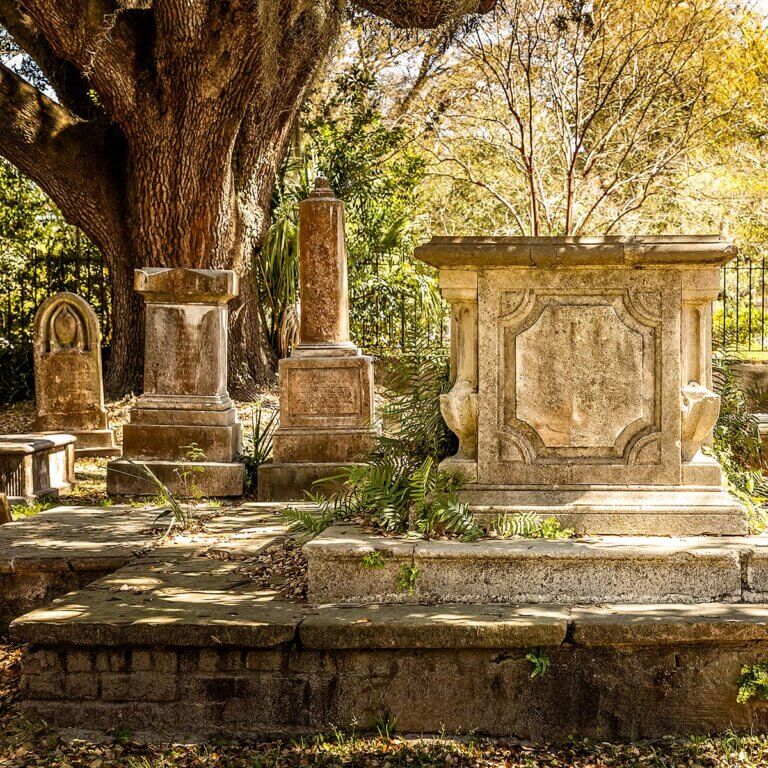
Because of its age and preserved layout, the site is often listed among the haunted places in Charleston where the past feels layered and close, especially during quiet evening hours.
Some guests like exploring haunted sites on foot. Others prefer a bit of space while hearing the city’s darker stories. This experience allows guests to travel between locations aboard a comfortable, air-conditioned vehicle designed for nighttime storytelling rather than walking the entire route.
The Ghosts & Gravestones Frightseeing Tour is led by costumed ghost hosts who guide the evening with a blend of documented history and dark humor. Stories unfold as the ride moves through the historic district, passing former jails, graveyards, and streets tied to long-shared accounts. Certain locations include time off the vehicle, while others are experienced as you roll past places where events took place. The tour also includes exclusive nighttime access to Bethany Cemetery, a setting most visitors never see after dark.

Haunted places in Charleston stay part of the conversation because the city never separated its history from everyday life. Old buildings weren’t pushed aside or rebuilt somewhere else. They stayed in use, often right where hard things happened. That kept stories tied to real streets, real names, and real events instead of letting them fade into legend.
People who visit these locations aren’t just hearing about the past. They’re seeing the same walls, paths, and rooms that show up again and again in long-shared accounts. That’s why certain places keep coming up across generations. Belief doesn’t really factor into it. The history is still there, and after dark, it’s easy to feel how close it remains.
Yes, photos are allowed. Many guests bring cameras or use their phones, especially near graveyards, historic buildings, or older streets. Some people keep their flash on to capture details, while others prefer low light. It’s common for guests to look back at photos later and notice shadows, reflections, or details they didn’t catch in the moment.