Click for possible tour changes on the day of your tour here.
Charleston haunted cemetery

The Definitive Guide to Charleston's Oldest Cemetery and Haunted Grounds

Main Content

Explore the Oldest Cemeteries in Charleston

Charleston’s history stretches back over 350 years, and its earliest burial grounds serve as quiet records of the city’s colonial past, wartime struggles, and devastating epidemics. Earning the nickname the “”Holy City”” for its numerous church steeples, Charleston is home to incredibly old graveyards that often sit right next to busy modern streets. Taking the Ghosts & Gravestones tour gives you an atmospheric, nighttime look into these ancient sacred spaces and the supernatural folklore that surrounds them.


Tour Historic Graveyards with Ghosts & Gravestones

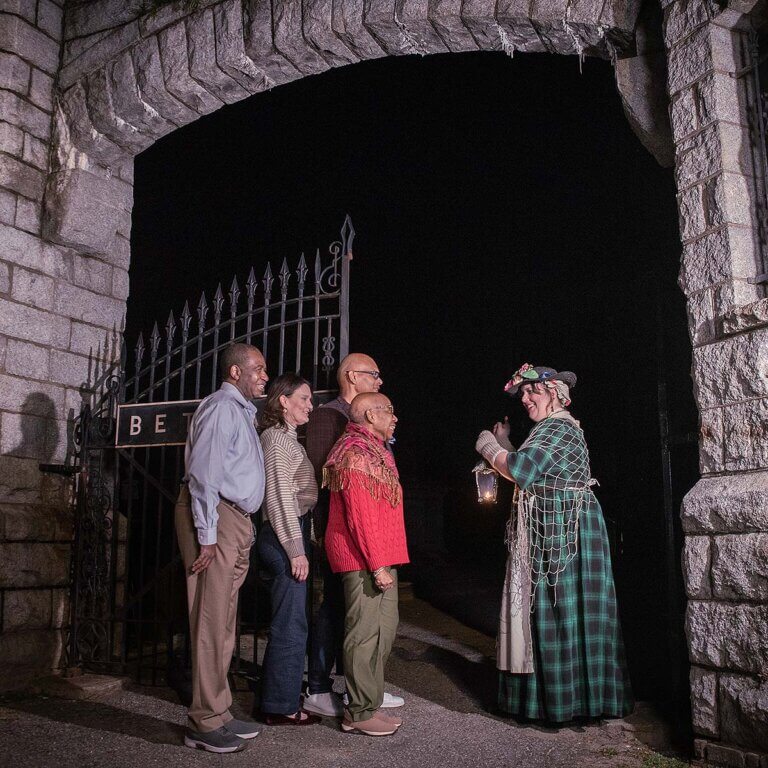
  • Exclusive Nighttime Entry: Gain special after-hours access behind the locked iron gates of Bethany Cemetery, a quiet and eerie experience reserved specifically for our guests.
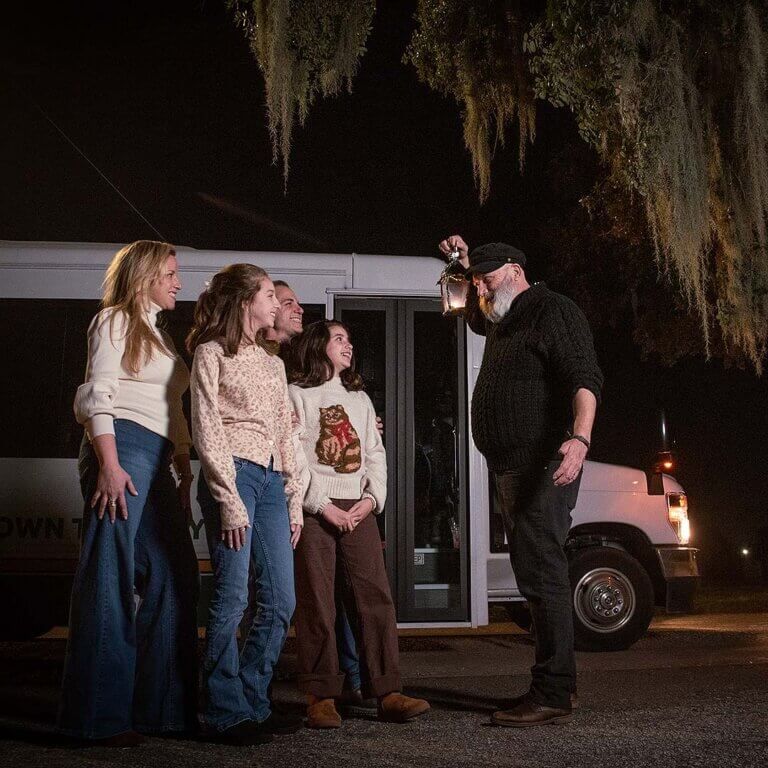
  • Lantern-Lit Walks: Carry a provided lantern through the darkened burial paths, giving you just enough atmospheric light to view the centuries-old slate headstones.
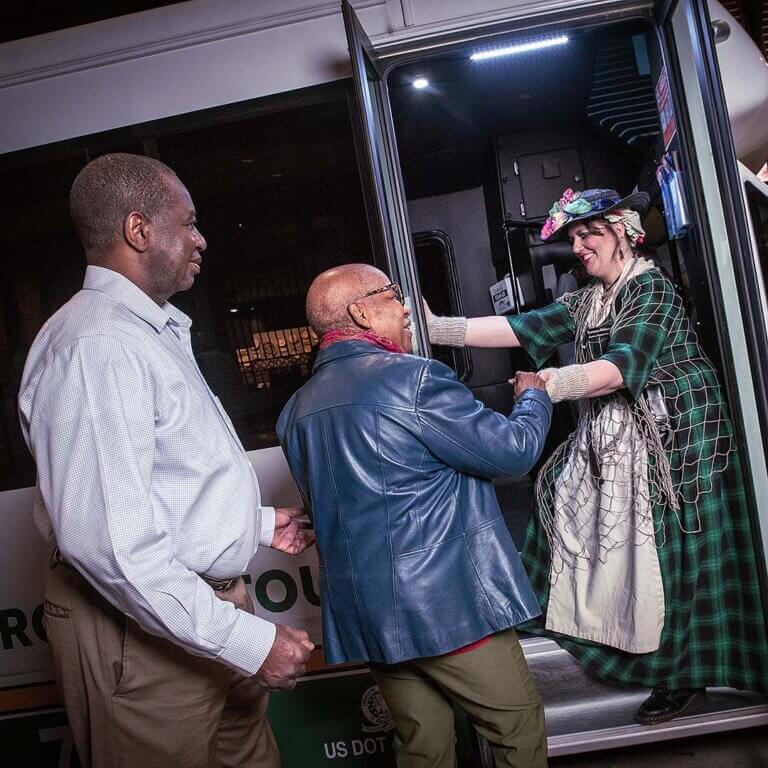
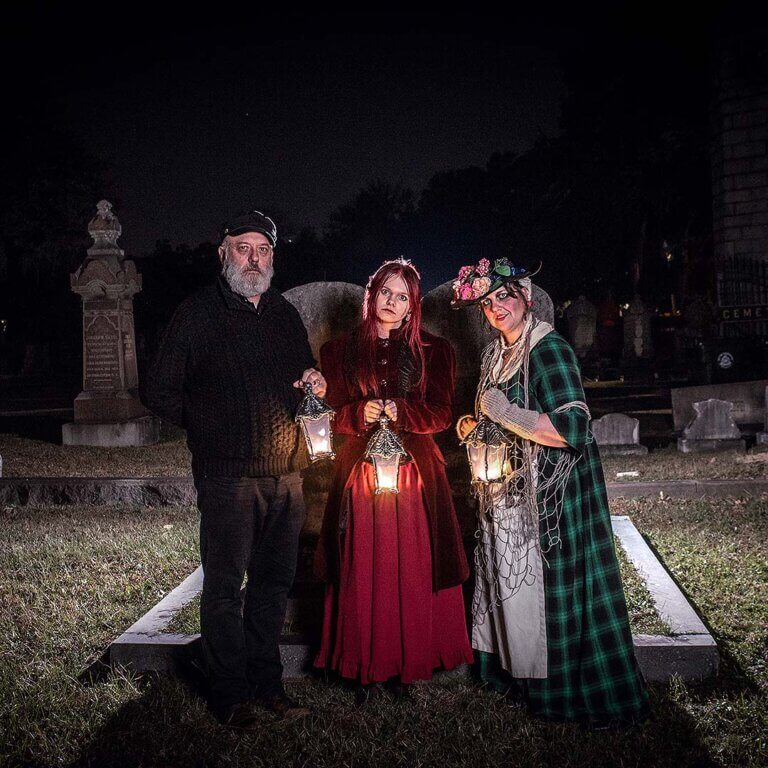
  • Theatrical Ghost Hosts: Listen to live narration from a costumed storyteller who brings the city’s oldest legends to life with dark historical facts and local humor.
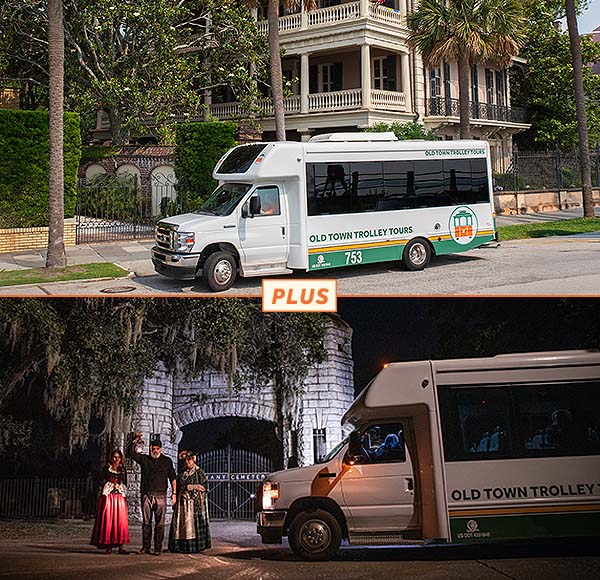
  • Climate-Controlled Travel: Ride through the historic district’s shadowy corridors in a luxury, air-conditioned vehicle, saving you from long walks on hot Lowcountry nights.


Key Oldest Cemeteries and Hauntings in Charleston

  • Circular Congregational Church Graveyard: Established in 1681, this is widely considered one of the oldest burial grounds in the city. Filled with pre-Revolutionary slate tombstones, visitors often report seeing shadowy figures moving among the ancient stones and feeling sudden temperature drops.
  • St. Philip’s Episcopal Church Cemetery: Dating back to the 1680s, this historic site holds the remains of prominent early settlers and soldiers. It is famous for reports of spectral sentries walking the perimeter and the legendary ghost photograph of a mourning woman at a grave.
  • Unitarian Church Graveyard: Known for its intentional, lush overgrowth and winding paths, this romantic but spooky cemetery is heavily tied to local lore, including rumors of a spectral “”Lady in White”” and the unmarked resting place of Lavinia Fisher.
  • Bethany Cemetery: Serving as the premier destination on our tour, the complete stillness of this locked, expansive graveyard at night amplifies every shadow and sound, making it a thrilling highlight for paranormal enthusiasts.

With over 350 years of pirate executions, tragic plagues, and wartime bloodshed woven into its foundations, it’s no wonder Charleston is consistently named one of America’s most ghostly cities.

The city earned its nickname, the Holy City, due to the numerous church steeples dotting the skyline. However, beneath those picturesque steeples lie centuries of spirits that refuse to rest. To understand the supernatural side of this coastal destination, you must explore the historic burial plots that define the landscape. This comprehensive guide details the most active locations, their restless inhabitants, and how you can experience these sacred spaces after the sun goes down.

Oldest Cemeteries of the Holy City

The burial customs of early South Carolina are preserved within the gates of the downtown historic district. Each sacred plot tells a different story about the cultural evolution of the region, shifting from early colonial realism to grand Victorian romanticism. Each site serves as a unique entry point into the supernatural heritage of the region, making a visit to Charleston’s oldest cemetery grounds an essential part of any itinerary.

Circular Congregational Church Graveyard

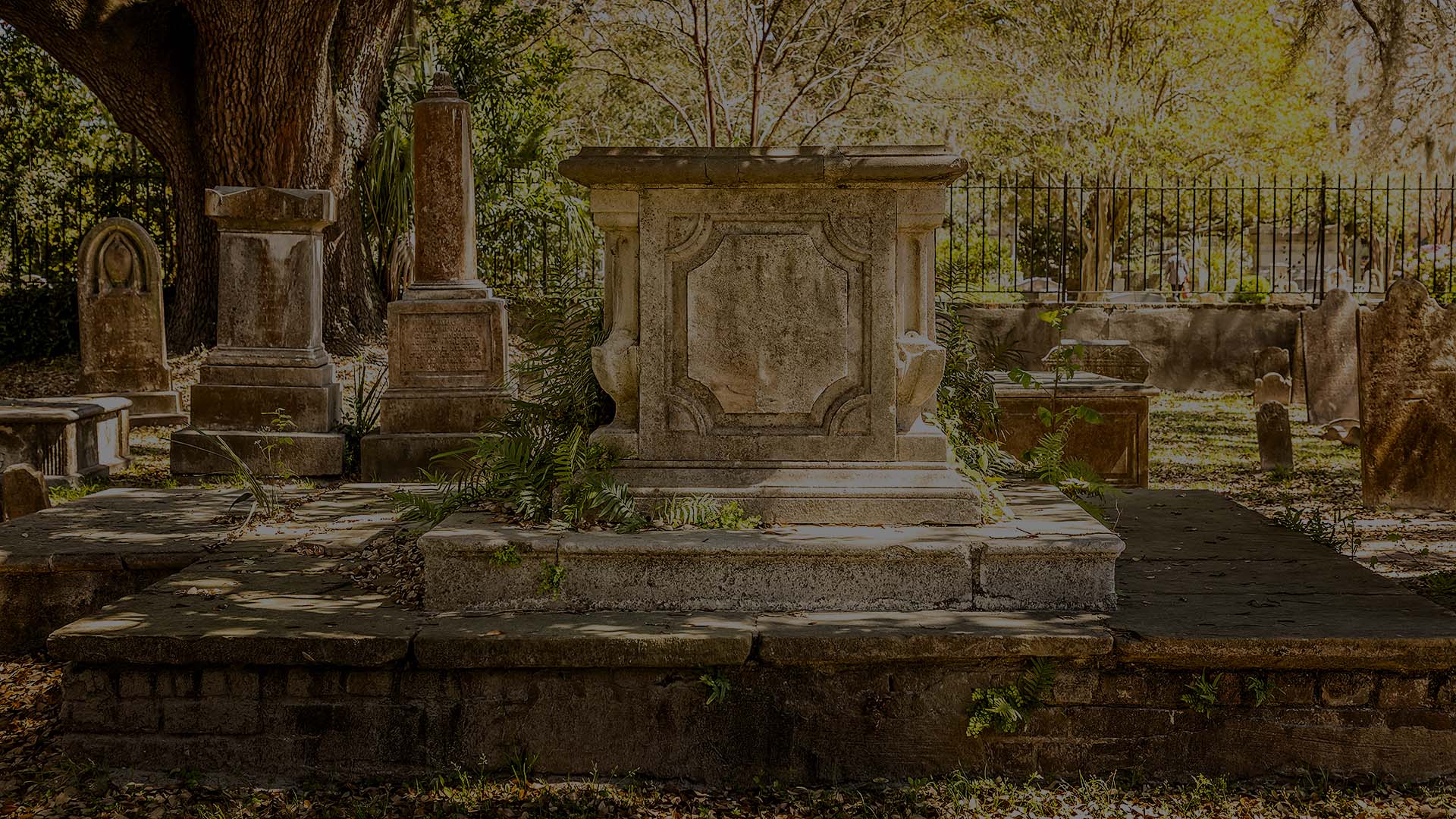
As the oldest surviving English burial grounds in the city, this tight-knit graveyard feels like stepping into the 1700s. It’s world-renowned for its dark New England slate tombstones decorated with colonial folk art, including winged skulls and soul effigies. These carvings served a dual purpose in early America. They reminded the living of their mortality while providing visual representations of the soul for a population that was largely illiterate.

  • Establishment Date: Early 1700s
  • Key Visual Features: Dark New England slate, winged skulls, and soul effigies
  • General Atmosphere: Deeply antique, intimate, and historically dense


Over centuries, the ground has shifted, causing many of the oldest markers to lean at unnatural angles. Walking among these markers offers a direct link to the earliest days of settlement, where the line between history and the supernatural is thin.

Circular Congregational Church graveyard in Charleston, with ancient headstones
St. Philip's Episcopal Churchyard in Charleston, featuring historic gravestones

St. Philip's Episcopal Churchyard

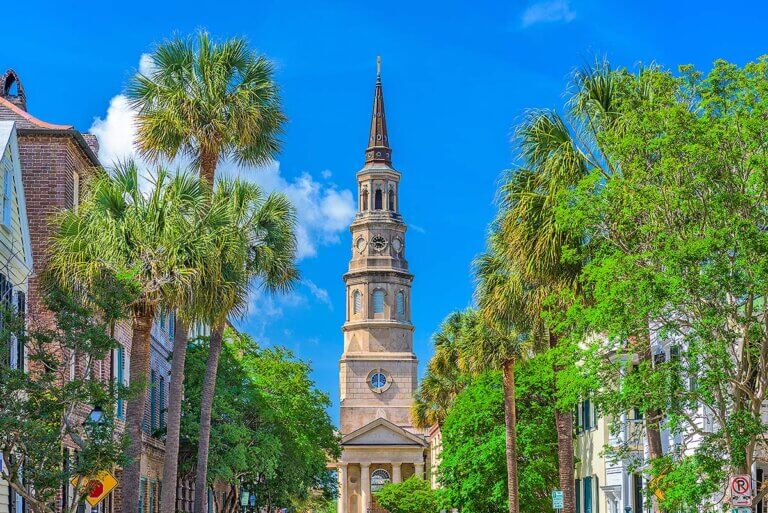
Enclosed by beautiful weathered brick walls, St. Philip’s is the epitome of classic Charleston royalty. It serves as the final resting place for some of America’s most famous early statesmen and historical figures. Governors, signers of the Declaration of Independence, and military heroes are interred within. The church building itself features a majestic steeple that once guided ships safely into the harbor, acting as a beacon for travelers.

  • Physical Layout: Separated by Church Street into two distinct sections
  • Notable Burials: Prominent early American statesmen and local historical figures
  • Visual Elements: Weathered brick walls, grand monuments, and historic wrought iron

Divided by Church Street into two distinct sides, its grand sweeping layout feels both majestic and deeply reverent. The western cemetery houses the graves of those who were born in the colony, while the eastern yard surrounding the church building contains those born outside of South Carolina. The massive wrought-iron gates and towering magnolia trees add to the somber, elite atmosphere of the property. The architecture and landscaping reflect the high social standing of its congregation during the antebellum period, making it a crucial stop for anyone tracking the history of Charleston’s oldest cemetery sites.

Unitarian Churchyard

This cemetery is a Southern Gothic dream. Maintained with a philosophy of letting nature take its course, the paths are delightfully overgrown with wild vines, green ferns, and reaching trees. Unlike the meticulously manicured lawns of modern memorial parks, this churchyard embraces natural growth as a symbol of life overcoming death. The canopy of Spanish moss filters the sunlight, creating an ethereal green glow across the landscape during the day and deep, unpredictable shadows at dusk.

  • Maintained Philosophy: Allowing nature to take its course naturally
  • Dominant Vegetation: Wild vines, green ferns, Spanish moss, and reaching trees
  • Literary Associations: Deep romantic literature connections and Edgar Allan Poe folklore


This burying ground is also a favorite for literary enthusiasts and hopeless romantics alike, heavily rumored to be the landscape that inspired Edgar Allan Poe’s haunting poetry.

Unitarian Churchyard in Charleston, featuring ancient trees
Bethany Cemetery in Charleston, displaying weathered tombstones

Bethany Cemetery

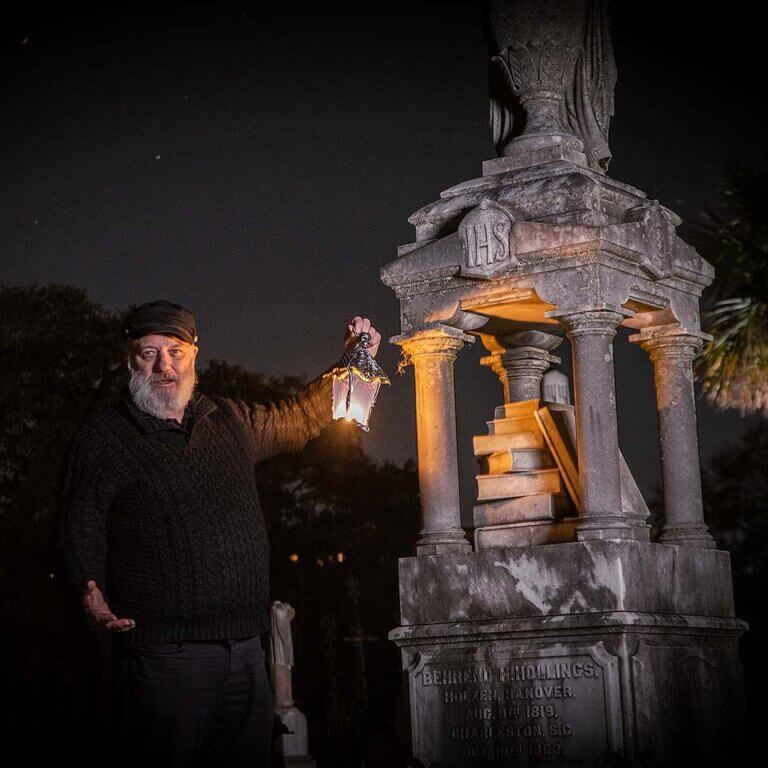
Moving into the Victorian era, Bethany Cemetery is defined by its grand, dramatic marble monuments and sweeping landscapes. Established further north to accommodate the growing population of the city, this cemetery showcases the dramatic shift in burial practices during the 19th century.

  • Historical Era: Victorian period
  • Architectural Style: Grand marble monuments, large family plots, and open landscapes
  • Tour Access: Exclusive nighttime host for Ghosts & Gravestones tours

As one of the exclusive nighttime settings for the Ghosts & Gravestones tour, it transforms into a thrilling, shadow-filled sanctuary perfect for lantern-lit storytelling. The towering monuments cast elongated shapes across the lawns, creating an environment where your eyes easily play tricks on you, making it a prime location for witnessing the paranormal. For travelers investigating the vast history of Charleston’s oldest cemetery options, Bethany offers a look into 19th-century mourning practices.
Haunted Legends of Charleston

The rich history of the region has generated numerous ghost stories that have survived through generations. These tales are rooted in real historical events, documentation, and tragic circumstances. The spirits associated with these locations remain anchored to the places where they lived, suffered, or died.

Lavinia Fisher: America's First Female Serial Killer

In the early 1800s, Lavinia Fisher and her husband, John, ran the Six Mile Wayfarer House, an inn just outside the city. Legend has it that Lavinia would invite weary travelers in for tea, spike it with poison, and then her husband would finish them off to steal their belongings. The couple targeted independent merchants and travelers who carried large sums of cash, making it easy for people to disappear without raising immediate suspicion. They were eventually caught and sentenced to hang at the Old City Jail in 1820.

Because a married woman could not be executed under South Carolina law at the time, Lavinia was reportedly hanged in her white wedding dress after her husband went first, making her a widow. This loophole allowed the state to carry out the sentence.

Before the trapdoor opened, she screamed to the crowd, “If anyone has a message for the devil, give it to me, for I shall see him in a moment!” Visitors to the jail frequently report seeing a frantic woman in a tattered white dress pacing the upper floors. The intense energy of her final moments seems to have left a permanent imprint on the building.

The Tragedy of Sue Howard Hardy

In 1888, a local woman named Sue Howard Hardy gave birth to a stillborn child. Six days later, consumed by grief and complications from childbirth, Sue followed her baby to the grave. This dual tragedy was common in the 19th century, but the story of Sue Howard Hardy did not end with her burial. Her resting place inside the gates of St. Philip’s Episcopal Churchyard remains a focal point for supernatural activity.

Sue’s spirit is said to mournfully watch over her child’s resting place. This legend gained massive national attention in 1987 when a photographer captured a clear image of a hooded pale transparent figure in a Victorian dress bending over Sue’s grave. The photograph underwent extensive analysis, yet no evidence of tampering or technical malfunction was ever found. To this day, tour guides note that pregnant women walking past her gate often experience sudden drops in temperature, overwhelming waves of sadness, or a strange tugging on their clothes. The protective, grieving energy of the mother remains tied to the site.

Edgar Allan Poe and the Ghost of Annabel Lee

Before he was a famous writer, Edgar Allan Poe was stationed at nearby Fort Moultrie under an assumed name. Local lore says he fell madly in love with a Charleston girl named Anna Ravenel. The young couple found solace in the historic district, escaping the rigid expectations of local society. Her wealthy father disapproved of the penniless soldier and forbade them from seeing each other, forcing them to meet secretly in the overgrown Unitarian Cemetery.

When Anna died of yellow fever shortly after, her father buried her in an unmarked grave so Poe could never find it. He wanted to sever the connection between them completely, even in death. Heartbroken, Poe wrote his final poem, “Annabel Lee,” about his lost love in a “kingdom by the sea”. A spectral Lady in White is frequently seen wandering the lush, intentionally wild paths of the Unitarian Church Cemetery, searching endlessly for her lost lover. The spirit mimics the actions of the living girl, waiting among the ivy for a soldier who will never return.

Nettie Dickerson, the "Lady in Red"

In the mid-1800s, the Dock Street Theatre building operated as the Planters Hotel. The hotel was a popular gathering spot for wealthy planters, actors, and colorful local characters who frequented the city during the social season. Nettie Dickerson was a young clerk who frequently visited the hotel. She was known for her vibrant personality and her favorite bright red dress, which made her easily recognizable in the crowded corridors. Legend says she was standing on the second-story balcony during a violent thunderstorm when a rogue bolt of lightning struck the balcony, killing her instantly.

Affectionately dubbed the “Lady in Red,” Nettie’s apparition is regularly seen by theater staff and actors gliding along the second-floor balcony or walking right through the walls of the upper levels, still wearing her favorite red dress. Actors preparing in the dressing rooms have reported seeing her reflection in their mirrors, and stagehands working late at night often hear the sound of footsteps passing above them when the theater is completely empty. Her sudden, shocking death seems to have frozen her in time, keeping her tied to the historic structure.

Ghosts & Gravestones Tour in Charleston

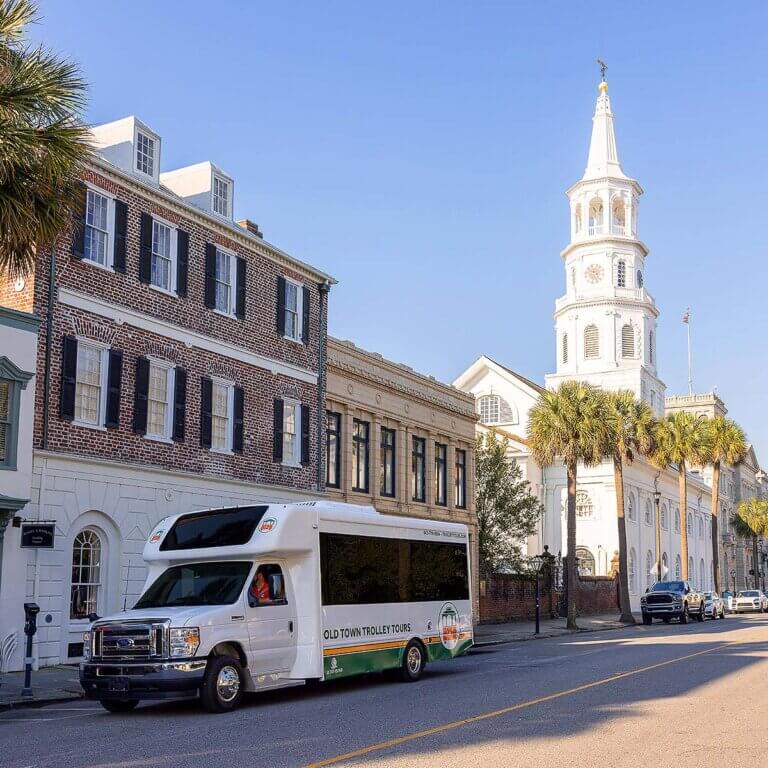
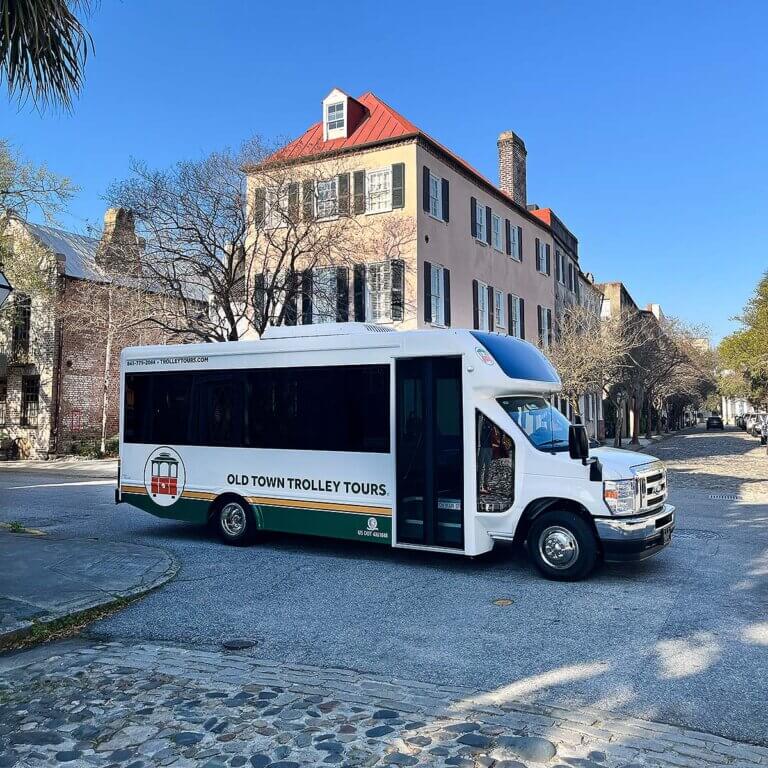
To truly understand the dark history of the Lowcountry, you must step aboard the Trolley of the Doomed on a Ghosts & Gravestones Frightseeing Tour. Led by your expert Ghost Hosts, you will navigate the darkened streets and listen to tales of murder, tragedy, and enduring spirits that haunt the historic district. The narration combines documented historical facts with deep-rooted folklore, ensuring you get a complete picture of the supernatural landscape.

As you ride through the city, the Ghost Hosts bring the past to life with dramatic storytelling and historical insights. You will learn about the early settlement, the horrors of the slave trade, the devastation of the Civil War, and the natural disasters that repeatedly reshaped the city.

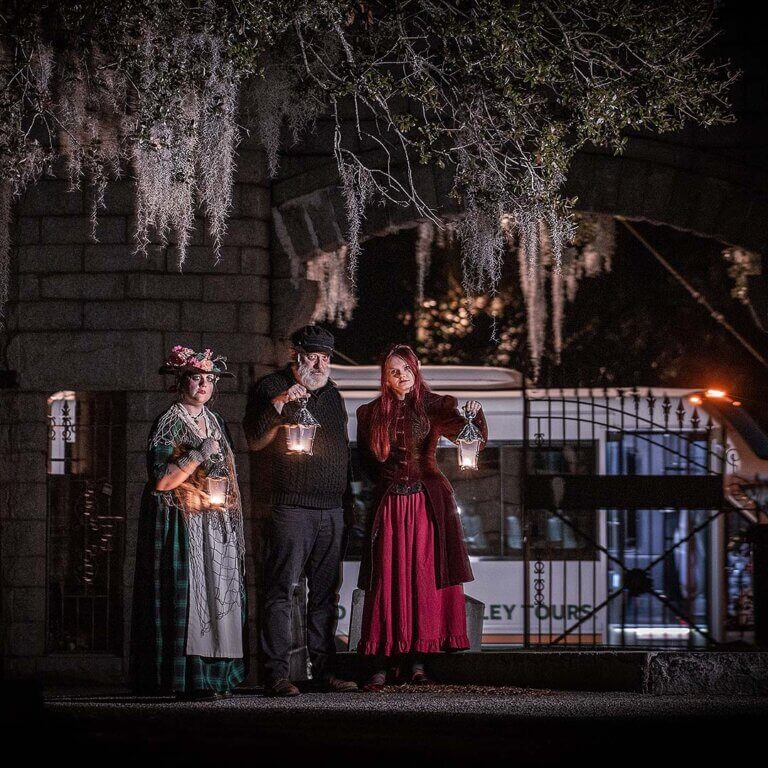
Charleston Ghosts & Gravestones host inside Bethany Cemetery

The highlight of the tour is the exclusive entry into Bethany Cemetery. Walking among the towering Victorian monuments under the cover of night creates an unforgettable atmosphere. With only the light of lanterns to guide your steps, you will explore the paths where spirits are said to walk, making it the ultimate experience for anyone wishing to connect with the paranormal side of the Holy City.

Cemetery Preservation and Paranormal Research

The preservation of these historical sites is paramount to maintaining the thin veil between the past and the present. Local historical societies work diligently to conserve the delicate headstones, ensuring that the stories carved into the slate and marble are not lost to time.

As for the paranormal, researchers often visit these locations, utilizing sophisticated equipment to document the anomalous phenomena reported by visitors and staff alike.
Visitors are encouraged to respect the sacred nature of these grounds while remaining open to the unexplained experiences that frequently occur within their walls.

Come Visit Charleston’s Cemeteries

Charleston is a city where the past is preserved with immense care, and that preservation extends to the spirits that call it home. The historic churchyards, ancient slate markers, and grand Victorian monuments are not just historical artifacts. They are active sanctuaries for the souls of those who shaped the region.

Investigating Charleston’s oldest cemetery sites allows you to connect directly with the human experiences that defined early America. Booking a specialized tour like Ghosts & Gravestones allows you to experience these locations with the respect and context they deserve, uncovering the dark secrets that continue to linger beneath the beautiful exterior of the Lowcountry.

FAQs

Can you visit Charleston cemeteries at night?

Public access to most historic downtown churchyards is strictly prohibited after sunset to protect the ancient monuments from damage and vandalism. However, the Ghosts & Gravestones tour offers exclusive, authorized nighttime entry into Bethany Cemetery, allowing guests to legally and safely explore a historic burial ground under the guidance of expert Ghost Hosts.

Which Charleston cemetery is considered the most haunted?

The Unitarian Churchyard and St. Philip’s Episcopal Churchyard are frequently cited as the most active locations in the downtown historic district. The Unitarian grounds are famous for the sightings of the “Lady in White,” while St. Philip’s is known worldwide due to the famous 1987 photograph of the spirit of Sue Howard Hardy.

How can I tour a Charleston cemetery after dark?

The most reliable way to tour a cemetery after dark is by purchasing tickets for the Ghosts & Gravestones Frightseeing Tour. This specialized trolley tour provides the necessary access, safety, and historical context required to explore these sacred spaces after hours.

What is the oldest cemetery in Charleston?

The Circular Congregational Church graveyard holds the title of the oldest surviving English burial ground in the city. With grave markers dating back to the early 1700s, it serves as a valuable historical record of the earliest European settlers, featuring unique New England slate headstones decorated with classic colonial folk art.