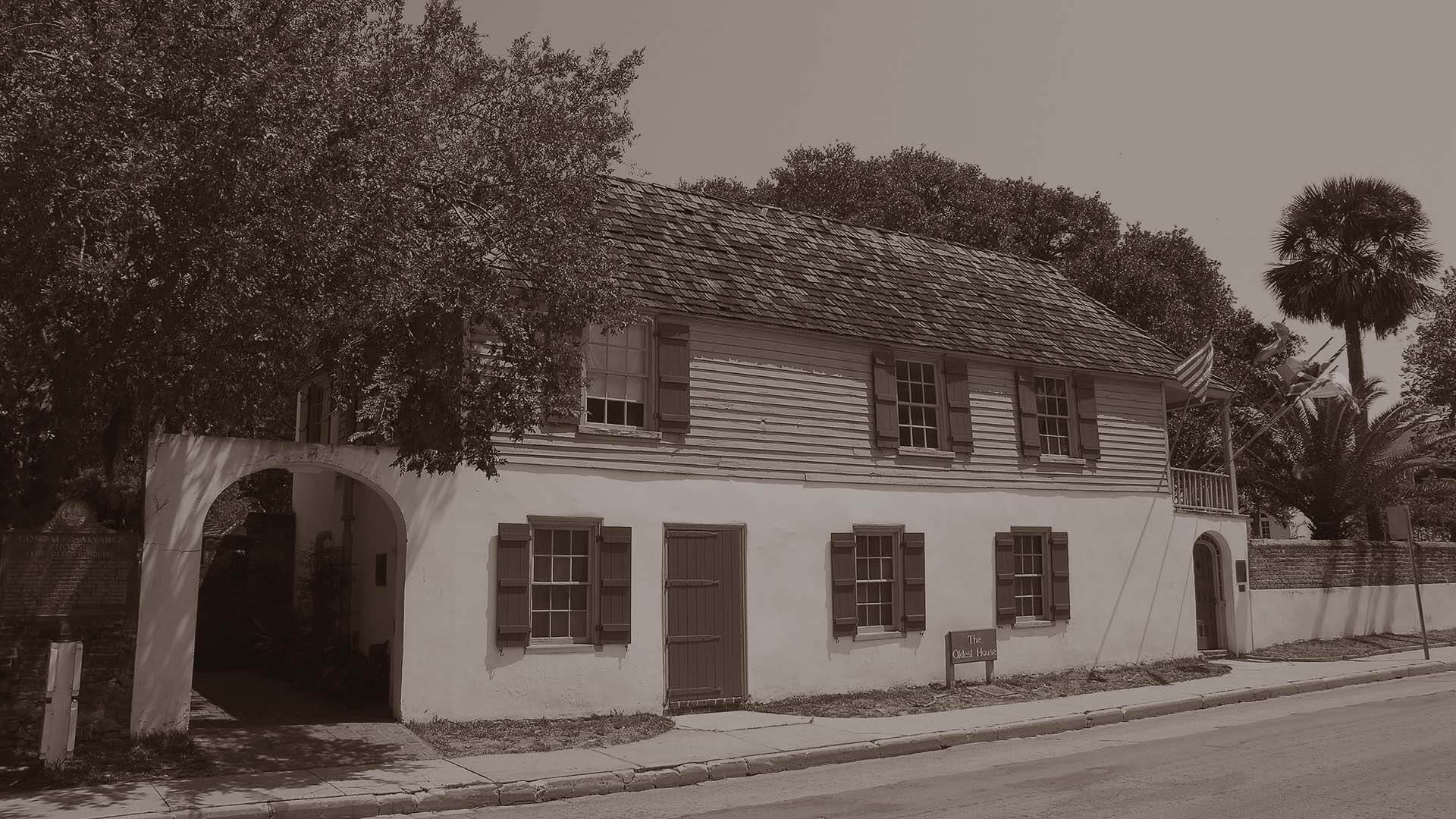
Nestled south of downtown St. Augustine on St. Francis Street, the González-Álvarez House, also known as the Oldest House, is a historic marvel blending coquina and wooden architecture, showcasing the city’s evolution. Its first floor, built from local coquina rock, supports an upper level with a clapboarded exterior and a hip roof crowned with wooden shingles. Since 1801, the house has witnessed eight families and multiple periods of alteration, reflecting resilience through different colonial administrations. Beyond its architectural charm lies a haunted history, inviting exploration into ghostly encounters that enrich the González-Álvarez House’s tapestry of time.
The González-Álvarez House, located in St. Augustine, Florida, is a historic landmark with a rich and fascinating history. The land on which this house stands has been occupied since the 17th century when a building was documented to have been standing there.
It was in about 1723 that the present house’s earliest period of construction dates when the first floor was built. The house belonged to Tomás González y Hernández, an artilleryman at the Castillo de San Marcos, and his family.
The González-Álvarez House has witnessed significant events in American history, as it has stood through various conflicts and changes over the years. Today, visitors can explore this historic site and learn about its role in shaping the country’s past.
As you walk through the rooms and corridors of this house, you can imagine what life was like for the González family and how they contributed to their community and nation. It is a reminder of the sacrifices made by early settlers and soldiers who helped defend our country.
The González-Álvarez House, with its rich history and diverse inhabitants, is a beacon for tales of the paranormal. Ghostly whispers echo from the time of the 18th century infantryman, Jose Tovar, who first claimed this corner as his home in 1763. You might hear the phantom rustling of papers from the British Period, when Scottish merchant John Johnson resided here, maintaining the house’s original size and stature. A strange serenity surrounds the era of Jose Coruna and Tomas Caraballo, hailing from the Canary Islands and serving as an assistant surgeon, respectively. There’s a distinct spectral air linked to Geronimo Álvarez, who bought the property in 1791, and the residence remained with his lineage till 1871. The spirit that most captivates visitors’ imaginations, though, is that of Civil War General Martin D. Hardin, a later occupant, whose ethereal presence seems to linger in the house’s old wooden beams and coquina walls.
The St. Augustine Historical Society: Since 1918, the house has been under the stewardship of the St. Augustine Historical Society.
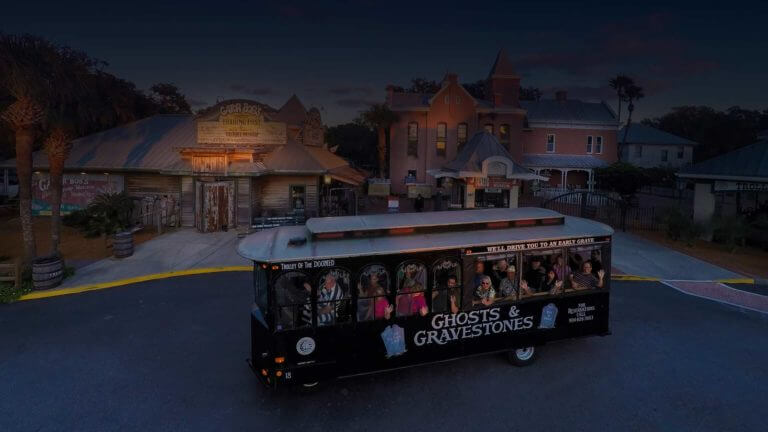
If you’re interested in the spooky side of St. Augustine’s history, try the Ghosts & Gravestones Tour. This tour takes you on a spooky adventure into the city’s haunted past, different from the usual history lessons. As you cruise through the Old City streets in the dark, the hosts will tell you creepy stories about ghosts and strange events that happened in important old buildings. It’s an exciting experience that combines history and mystery, giving a new perspective on the city’s past.
The González-Álvarez House, also referred to as “The Oldest House,” is a significant historical landmark that offers insights into Florida’s Spanish Colonial past. Its origins trace back to the early 18th century, with its earliest documentation being a map from 1764. Despite numerous alterations over the centuries, the structure retains key characteristic features of Spanish Colonial residential architecture. The house owes its name to two of its residents — Tomás González y Hernández, a soldier and native of Spain who lived there in the late 18th century, and Geronimo Álvarez, a prominent figure in the community who inhabited the house in the mid-19th century. Over its extensive history, the house has withstood wars, hurricanes, and changes in ownership, serving as a resilient testament to the region’s past.