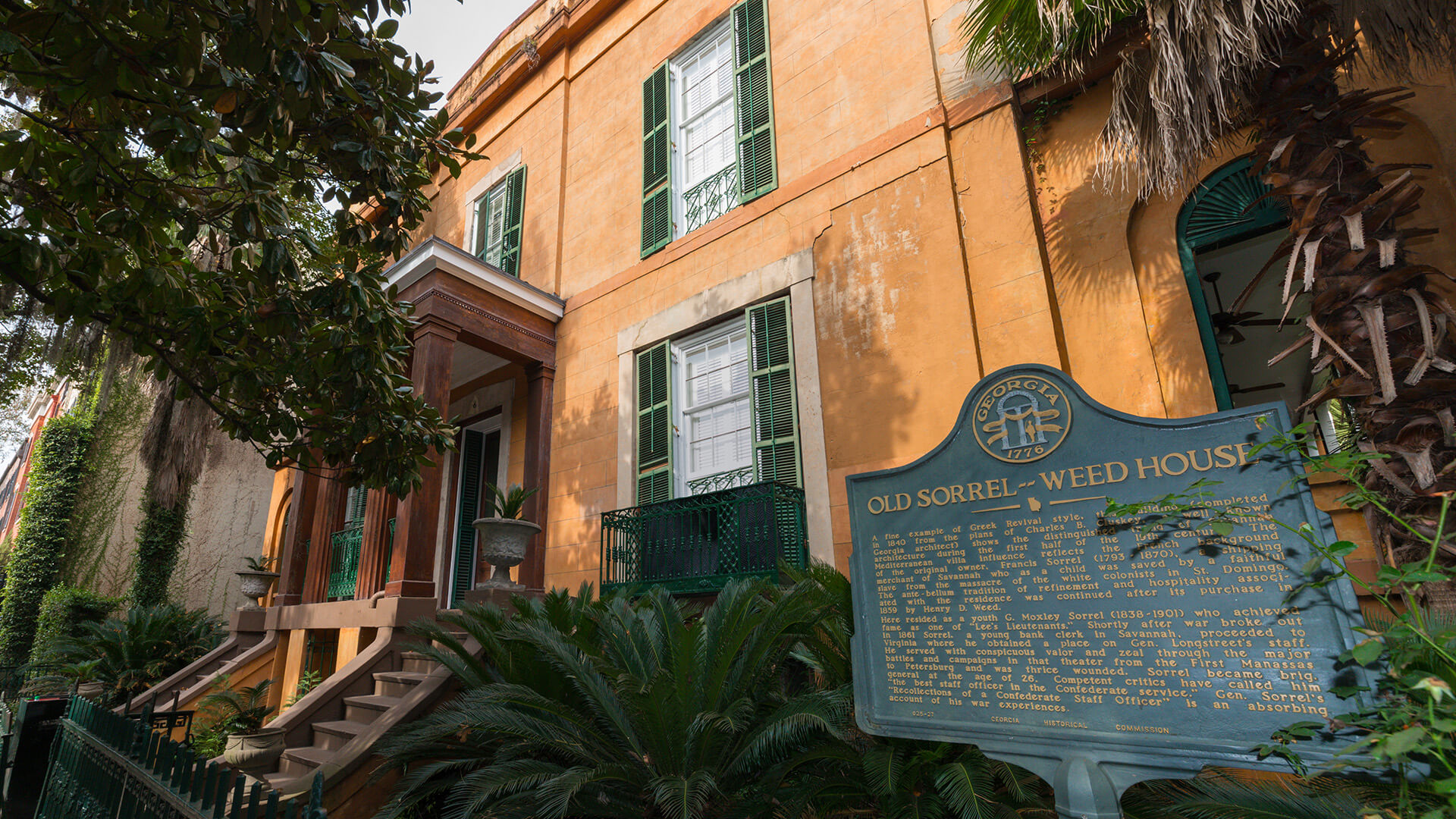
In the heart of Savannah’s historic district stands the Sorrel Weed House, a large antebellum mansion with a long and unsettling past. Built between 1836 and 1841 by Francis Sorrel, a wealthy cotton merchant, it was designed by Architect Charles B. Cluskey to show Sorrel’s success and influence. Its mix of Greek Revival and Regency styles made it one of the most admired homes in the city, and its location near Madison Square placed it among other important 19th-century residences.
Behind its grand appearance was tragedy. One of the most well-known stories is about Francis Sorrel’s first wife, Matilda. Historical accounts say she died after falling from a third-story window, though many believe it was suicide tied to her husband’s rumored affair with a young woman enslaved in the home. This part of the Sorrel Weed House history is sensitive and emotional. It added a dark note to Savannah society at the time, and the story has been passed down for generations.
Visitors often share accounts of ghostly encounters linked to the people who once lived or worked in the Sorrel Weed House. Matilda Sorrel’s spirit is said to remain in the master bedroom and balcony area. Some guests have described seeing a shadowy figure in a white dress or hearing faint sobs. Many say the feeling in the room is heavy and filled with sadness.
The carriage house is tied to Molly, the young woman at the center of the affair rumors. Reports include sudden cold spots, the sound of soft footsteps and the sense of being watched. The Sorrel Weed House Savannah also carries memories from the Civil War, when it served as a temporary hospital. Visitors have claimed to see soldiers, hear groans and smell faint cigar smoke in the basement and upstairs rooms.
Some believe Francis Sorrel’s spirit is still in the house. In his study, people have reported a sudden chill or the uneasy feeling of someone nearby. Over the years, stories of personal loss, wartime events and ghost sightings have made the mansion one of Savannah’s most talked-about haunted locations.
Several rooms and spaces inside the Sorrel Weed House are known for unusual activity. The basement, with its thick masonry walls once used for storage, is often linked to Molly’s story. Visitors who step into this dimly lit area sometimes feel a sudden chill or believe someone else is there, even when it appears empty.
Matilda’s bedroom, arranged to look as it did in the 1800s, is another spot tied to strange events. Guests have reported faint shapes near the balcony doors, the sound of footsteps on the wood floor and the swish of fabric when the room is empty. On the second-floor landing, the curved staircase is known for giving visitors a feeling that someone is standing behind them. These accounts have made the Sorrel Weed House a key site for people exploring Savannah haunted history.
This experience provides guests with more than just a ride between landmarks. As the trolley moves beneath Spanish moss lit by soft lamplight, you’ll hear about real tragedies, unusual encounters and the people whose lives shaped Savannah’s haunted history. Stops also include the Andrew Low House and the Perkins & Sons Chandlery on River Street. The chandlery, once bustling with sailors, merchants and heavy cargo, is now known for unexplained footsteps, knocks and sudden chills.
The final stop is the Sorrel Weed House, where you’ll walk through rooms that have been the focus of ghost stories for generations. Guides point out architectural details, share the home’s construction history and connect it to the lives of Francis Sorrel, his family and others tied to the property. Standing in the home at night lets you take in the atmosphere for yourself. Some guests describe a sudden chill, faint sounds or the feeling of someone close by. Whether or not you experience something unusual, the chance to explore one of Savannah’s most famous haunted landmarks, paired with the depth of the Ghosts & Gravestones® storytelling, makes this tour unforgettable.
Many guests prefer evening tours at the Sorrel Weed House Savannah for the added atmosphere and the chance to explore the property under low light, which enhances its ghostly reputation. Daytime visits allow for clear views of the architecture, decorative features and historical details. Choosing between day and night often comes down to whether you want to focus more on history, paranormal activity or a balanced mix of both. For those hoping to capture unusual photographs or audio recordings, night tours remain the most popular choice, and guides can often share tips for spotting activity in key locations.